



The digital era has opened doors for creators, freelancers, and entrepreneurs to build sustainable income streams without traditional physical products. Among the many opportunities available today, selling digital planners has quietly become one of the most accessible and profitable ventures for beginners and experienced creators alike. The growing use of smartphones, tablets, digital note-taking apps, and productivity tools has created a global market for well-designed digital planners that help users organize their lives, track goals, and manage daily activities.
In 2026, demand for digital planners continues to grow as more people rely on digital organizational systems rather than paper notebooks. Students, professionals, business owners, and content creators all look for planners that help them structure their schedules, manage projects, and track personal growth. This demand creates an opportunity for anyone willing to learn the best practices for selling digital planners that actually attract buyers.
Many beginners believe that creating a digital planner is difficult or requires advanced design skills. In reality, the process is surprisingly simple once you understand the right approach. The key is not just designing a planner but creating one that solves a specific problem for a specific audience and then presenting it in a way that makes people want to buy it.
This guide explores the best steps to sell digital planners that people actually purchase in 2026. By the end of this article, you will understand how to identify profitable planner ideas, create a useful digital product, package it correctly, choose the right platforms to sell it, and market it effectively so it reaches the right audience.
Why Digital Planners Are a Profitable Product in 2026

To understand why digital planners are worth creating, it helps to examine how the productivity culture has evolved in recent years. Many people now use tablets, laptops, and digital note-taking apps to organize their daily lives. Instead of carrying paper planners, users prefer digital tools that allow them to write, edit, duplicate pages, and track progress without limits.
Digital planners also appeal to buyers because they are reusable. A single purchase often gives users access to a complete planning system that they can duplicate or customize throughout the year. This convenience makes digital planners attractive for students managing academic schedules, entrepreneurs organizing business tasks, and individuals tracking personal habits or financial goals.
Another reason digital planners have become a popular product is the growth of online marketplaces that make selling digital downloads easy. Platforms dedicated to digital products allow creators to upload their planner once and continue selling it repeatedly without handling inventory or shipping. This makes the business model scalable and efficient, especially for creators who want to build passive income streams.
There is also increasing demand for niche planners designed for specific audiences. Instead of general planners that attempt to serve everyone, many buyers now search for planners designed for particular lifestyles or goals. Some planners help content creators organize social media calendars, while others help entrepreneurs track revenue and marketing strategies. Students search for academic planners, while individuals focused on self-improvement look for habit trackers and goal planners.
When you understand these trends, it becomes clear that the opportunity lies not only in creating digital planners but in creating the right type of planner for the right audience.
Step-by-step How to Sell Digital Planners
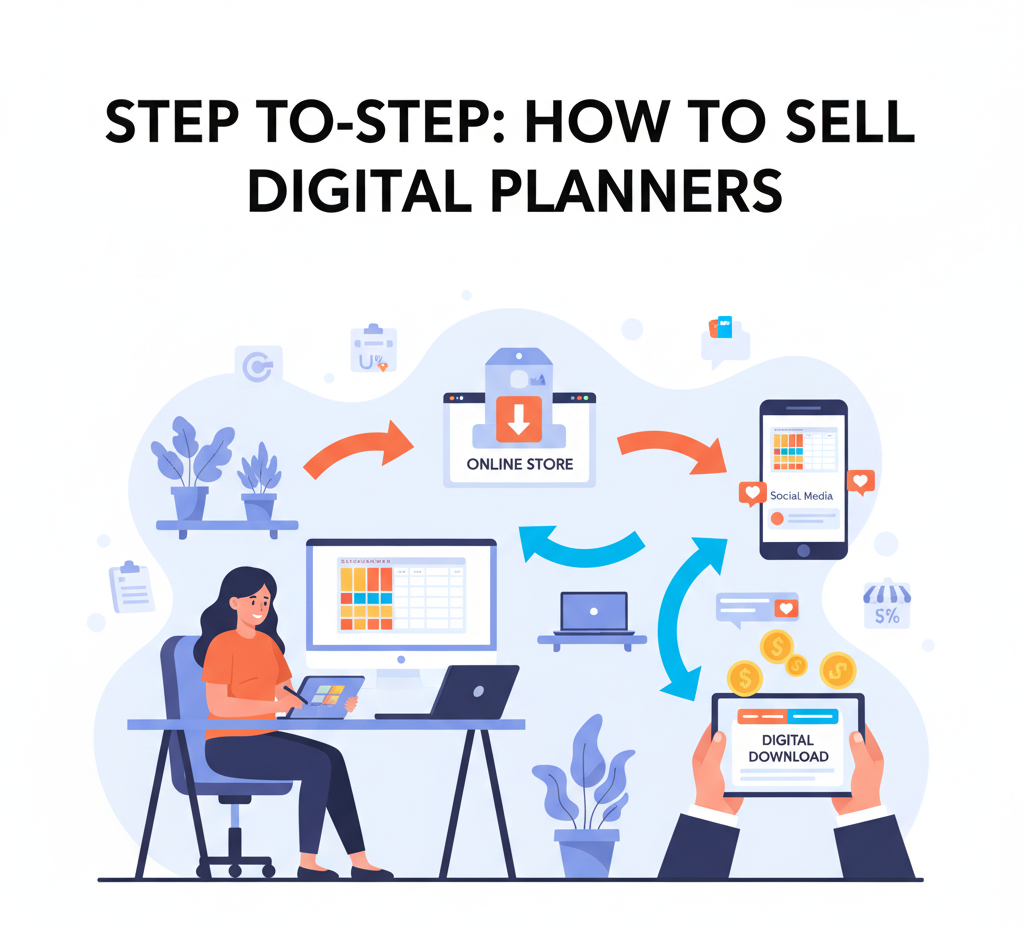
Step One: Research a Digital Planner Niche That People Actually Want
The first step to successfully sell digital planners is to identify a niche with real demand. Many beginners skip this stage and immediately start designing planners based on personal preferences rather than market demand. This approach often leads to products that look attractive but fail to attract buyers.
A more effective strategy begins with understanding what people are already searching for online. Digital marketplaces provide valuable insights into buyer behavior by showing which planners are popular and which consistently attract customers. By monitoring trending planner categories and reading customer reviews, you can identify gaps where new products could deliver improved solutions.
Niche research also involves paying attention to communities where people discuss productivity and personal organization. Social media platforms, productivity forums, and content creator communities often highlight common challenges people face when organizing their schedules or achieving their goals. Each of these challenges represents a potential opportunity for a specialized digital planner.
For example, someone managing multiple social media accounts may need a planner designed specifically for content scheduling and analytics tracking. A student preparing for exams may need a structured academic planner that organizes assignments, revision schedules, and study sessions. Entrepreneurs running small businesses may benefit from planners that combine financial tracking, project management, and goal planning.
Choosing a niche helps you design digital planners that speak directly to a particular audience. Instead of creating a general planner that competes with thousands of similar products, a niche planner offers targeted value that attracts buyers who feel the product was designed specifically for them.
Step Two: Create a Digital Planner That Solves a Real Problem
Once you have identified a profitable niche, the next step in learning how to sell digital planners is to design a planner that genuinely helps users solve a specific problem. A successful digital planner is not just visually appealing. It must also be practical and easy to use.
A well-designed planner begins with a clear structure that guides users through their planning process. Many effective planners start with an annual overview that helps users set long-term goals. This is usually followed by monthly planning pages that break down larger goals into manageable milestones. Weekly and daily pages then provide space to schedule tasks and track progress.
The usability of a planner is often more important than its visual design. If users find the layout confusing or the navigation difficult, they are unlikely to continue using it. For this reason, many successful planners include intuitive navigation features that allow users to move easily between sections.
Design simplicity also plays an important role. Clean layouts, readable fonts, and organized sections create a planner that feels comfortable to use every day. Overly complex designs may look impressive at first, but can discourage long-term use.
Many creators design their planners using beginner-friendly tools such as Canva because it allows them to create structured layouts without advanced graphic design experience. Other creators prefer tools like Microsoft PowerPoint or Keynote because they provide flexible page design and easy export options.
The goal at this stage is to design a planner that addresses a real challenge faced by your audience. When your planner helps users stay organized, track progress, or manage responsibilities more effectively, buyers are more likely to recommend it to others and return for future products.
Step Three: Export and Package Your Planner for Digital Use
Another crucial step in selling digital planners is ensuring the product is packaged for digital use. Even the most well-designed planner can fail if buyers struggle to download or use it.
Digital planners are typically delivered as interactive PDF files that allow users to navigate between sections and write notes within compatible applications. This format works well with many popular digital note-taking tools used on tablets.
Many buyers use applications such as GoodNotes or Notability to interact with digital planners. These apps allow users to write directly on planner pages using styluses or digital pens. Some users also import planners into Microsoft OneNote, where they can annotate pages and organize notebooks.
Because buyers use different devices and applications, it is important to include clear instructions explaining how to import and use the planner. A simple guide can prevent confusion and improve customer satisfaction.
Another important aspect of packaging involves product presentation. Buyers cannot physically hold digital products before purchase, so preview images play a significant role in persuading them to buy. High-quality mockups showing planner pages on tablets or laptops help buyers envision how they will use the product.
Clear product descriptions also increase trust. Explaining what the planner includes, who it is designed for, and how it helps users achieve their goals makes the product more appealing to potential customers.
Step Four: Choose the Right Platforms to Sell Your Planner
Understanding where to sell your product is another essential step in selling digital planners effectively. Digital marketplaces provide access to large audiences already searching for downloadable products.
Many creators choose to sell their planners on platforms such as Etsy because it attracts buyers actively searching for digital downloads and productivity tools. Other creators prefer platforms like Gumroad because it provides simple tools for selling and delivering digital products directly to customers.
For creators targeting African audiences or international digital entrepreneurs, platforms such as Selar provide convenient payment processing and easy product delivery. Another widely used platform is Payhip, which enables creators to sell digital files and manage marketing campaigns and discount offers.
Each platform has different advantages. Some offer larger audiences, while others provide more control over pricing and customer relationships. Many successful creators eventually sell their digital planners on multiple platforms to reach broader audiences and diversify their revenue streams.
Choosing the right platform also involves understanding the type of customers each marketplace attracts. Some platforms focus heavily on creative products, while others serve broader audiences interested in productivity tools or educational resources.
Step Five: Market Your Digital Planner So People Discover It
Even the most useful digital planners will struggle to generate sales if potential buyers never discover them. The final step in the best-selling digital planner process focuses on marketing strategies that draw attention to your product.
Content marketing plays a significant role in promoting digital planners. Creators who share productivity tips, planning strategies, and goal-setting advice often attract audiences interested in organization tools. These audiences naturally become potential customers for planners designed to support those same goals.
Visual platforms are particularly effective for promoting digital planners because planning systems are visually appealing products. Many creators showcase planner layouts, productivity workflows, and daily planning routines to demonstrate how their products improve organization and efficiency.
Platforms such as Pinterest are especially powerful for driving traffic because users frequently search for productivity ideas and organization tools. Short-form video platforms like TikTok also help creators reach new audiences through engaging demonstrations and tutorials.
Social media platforms such as Instagram allow creators to showcase planner designs, share productivity insights, and build communities around personal organization. Video platforms like YouTube provide opportunities to publish tutorials explaining how digital planners improve daily planning systems.
When marketing is consistent and focused on helping audiences solve real problems, digital planners gradually gain visibility and credibility. Over time, satisfied customers often share their experiences with others, creating organic word-of-mouth promotion.
Understanding Pricing Strategies for Digital Planners
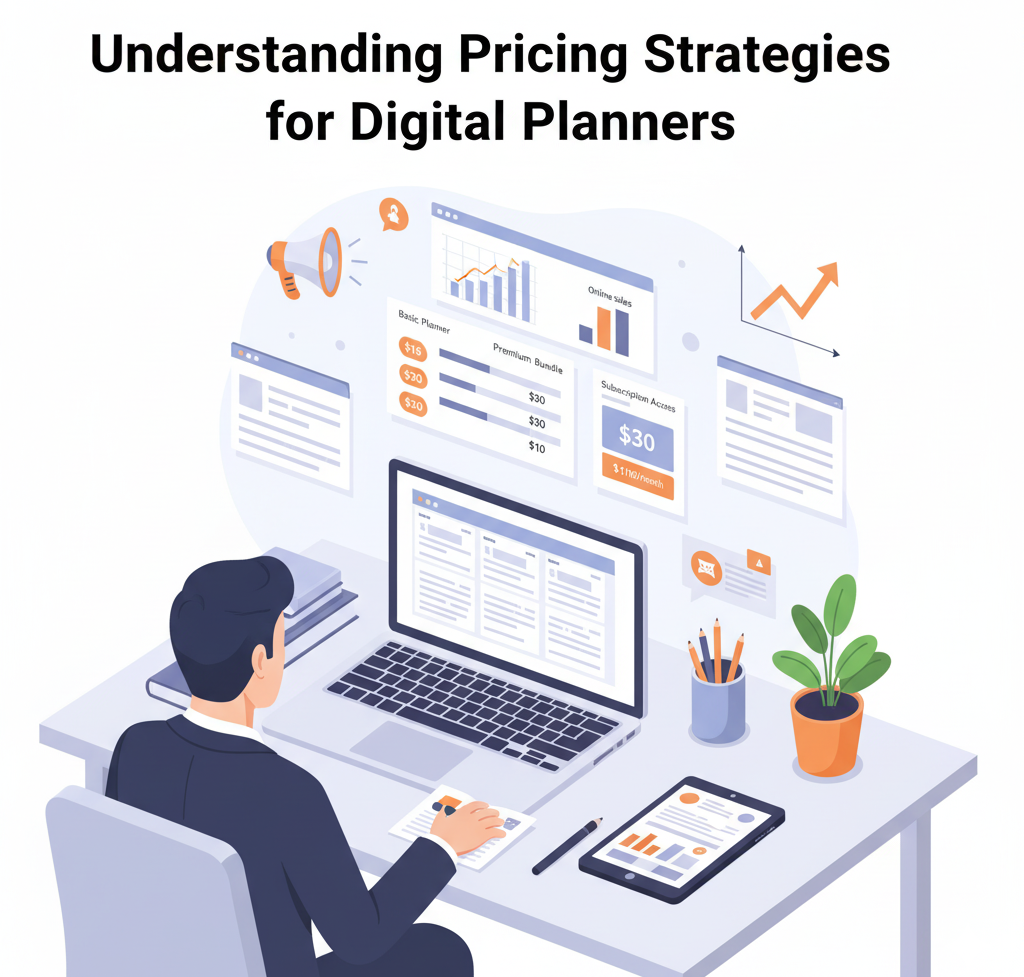
Pricing plays an important role in determining whether buyers perceive a planner as valuable. Many beginners struggle with pricing because they either undervalue their work or set unrealistic prices that discourage buyers.
Most digital planners fall within a moderate price range that reflects their usefulness and design quality. Beginner planners may start at lower prices, while more comprehensive planners that include multiple templates or specialized features often command higher prices.
Bundling multiple planners together is another effective strategy. Instead of selling a single planner, creators sometimes offer productivity bundles that include daily planners, habit trackers, financial planners, and goal journals. Bundles increase perceived value and encourage buyers to choose larger packages.
Seasonal promotions can also boost sales. Many customers purchase planners at the beginning of new years, academic semesters, or productivity challenges. Timing promotions around these periods can significantly increase visibility and demand.
Common Mistakes Beginners Make When Selling Digital Planners
While the process of creating and selling digital planners is relatively simple, beginners often make avoidable mistakes that limit their success. One common mistake involves copying existing planner designs rather than creating unique solutions. Buyers quickly recognize when products lack originality.
Another frequent mistake involves ignoring the importance of product previews. Since digital products cannot be touched or examined physically, buyers rely heavily on images to understand what they are purchasing.
Some creators also underestimate the importance of marketing. Uploading a planner to a marketplace does not automatically generate sales. Consistent promotion, useful content, and audience engagement are essential for long-term growth.
Focusing on only one platform can also limit exposure. Expanding to multiple sales channels increases the likelihood that potential buyers will discover your planners.
Income Potential From Selling Digital Planners

#1. Income potential depends on product quality
One of the most important factors that determines how much money a creator can make from digital planners is the quality of the product itself. Well-designed planners that are easy to use, visually appealing, and structured to solve real organizational problems tend to attract more buyers. When users find a planner helpful and enjoyable to use, they are also more likely to recommend it to others, leave positive reviews, and purchase additional planners from the same creator.
#2. Marketing consistency plays a major role
Another factor that strongly affects income potential is how consistently the planner is marketed. Even the best digital planners will struggle to sell if people do not know they exist. Creators who regularly promote their planners through blogs, social media, search engines, and online marketplaces tend to see better results. Consistent visibility helps attract new audiences and build trust over time.
#3. Audience reach influences sales growth
The size and engagement of a creator’s audience can significantly impact planner sales. When creators build communities through content platforms such as blogs, social media pages, or email newsletters, they create direct channels for promoting their products. A larger audience often means more potential buyers who are already interested in productivity, organization, or personal development tools.
#4. Many creators start with a single planner
Most successful planner sellers begin with just one product. Starting with a single digital planner allows creators to learn how the market works, understand customer preferences, and refine their design and marketing strategies. Over time, feedback from early buyers helps guide improvements and inspire new product ideas.
#5. Expanding the product catalog increases income potential
As creators gain experience, many gradually expand their product collections by designing planners for different niches or purposes. For example, a creator might begin with a simple daily planner and later add budget planners, student planners, business planners, or fitness trackers. A larger catalog increases the chances that customers will find something that fits their needs.
#6. Small monthly sales can grow into meaningful income
Even modest sales numbers can grow into a steady source of income when multiple products are available. Selling a few planners each month may not seem significant at first, but when several different planners are generating sales at the same time, the combined revenue can become quite substantial.
#7. Selling across different niches creates multiple revenue streams
Creators who design planners for different audiences often build multiple income streams. For example, a student planner may attract academic users, while a business planner appeals to entrepreneurs and freelancers. By serving several niches, creators reduce their dependence on a single audience.
#8. Digital planners are highly scalable products
One of the biggest advantages of selling digital planners is scalability. Unlike physical products that require manufacturing, packaging, and shipping, digital planners can be sold repeatedly without additional production work. Once the file is created and uploaded to a platform, it can be downloaded by buyers an unlimited number of times.
#9. No additional production costs after creation
After the planner is designed and listed for sale, there are typically no ongoing production expenses. This means that each new sale can generate profit without requiring extra labor or materials. This feature makes digital planners particularly attractive for creators who want to build long-term passive income streams.
#10. Creators can focus on growth and marketing
Because the production process happens only once, creators can dedicate more time to improving marketing strategies and expanding their product lines. This may include launching new planner designs, creating bundles, optimizing product listings for search engines, or promoting planners through content marketing.
Together, these factors explain why digital planners have become a popular digital business model. With the right combination of quality products, consistent promotion, and gradual expansion, even a small planner store can grow into a reliable online income source.
Conclusion: Best Steps to Sell Digital Planners
Selling digital planners has become one of the most accessible digital businesses in 2026 because it combines creativity, practicality, and scalable income potential. By understanding the best steps to sell digital planners, anyone can transform simple planning tools into valuable digital products that help people organize their lives.
Success begins with identifying a niche where users actively search for solutions. From there, designing planners that address real problems creates products that people genuinely want to use. Packaging the planner correctly ensures compatibility with digital tools, while choosing the right marketplaces allows creators to reach global audiences.
Marketing then brings everything together by connecting planners with the people who need them most. When these steps are followed carefully, digital planners can evolve from simple design projects into sustainable online businesses.
For creators willing to learn, experiment, and continuously improve their products, the opportunity to build a profitable digital planner business has never been more accessible.
