



Modern life is filled with distractions competing for your attention every minute of the day. Smartphones buzz with notifications, social media platforms constantly refresh with new content, and work demands often stretch far beyond traditional schedules. In this environment, relying on motivation alone to build better habits is no longer realistic. Motivation fades quickly, and willpower is a limited mental resource that becomes depleted throughout the day.
This is why many productivity experts and neuroscientists are increasingly focusing on systems rather than motivation. One of the most powerful systems emerging in the modern productivity landscape is habit stacking for daily success. Instead of forcing yourself to remember new routines or relying on bursts of discipline, habit stacking works by connecting new behaviors to actions you already perform automatically.
The concept became widely known through the work of author James Clear, whose book Atomic Habits introduced millions of people to the idea of linking habits together. However, in 2026, the conversation has evolved beyond productivity advice and into neuroscience. Researchers studying neuroplasticity, dopamine signaling, and behavioral momentum have begun to explain why habit stacking works so effectively inside the brain.
CHECK OUT: 10 Best Books That Will Level Up Your Thinking
Habit stacking is not simply a productivity trick. It is a biological shortcut that works with your brain’s natural learning system rather than against it. When used properly, habit stacking allows you to build powerful daily routines that improve your productivity, health, learning, and overall quality of life without constantly battling resistance.
Understanding the science behind habit stacking for daily success allows you to design routines that gradually reshape your brain, strengthen beneficial behaviors, and make high-performance actions feel natural and automatic.
The Psychology of Habits
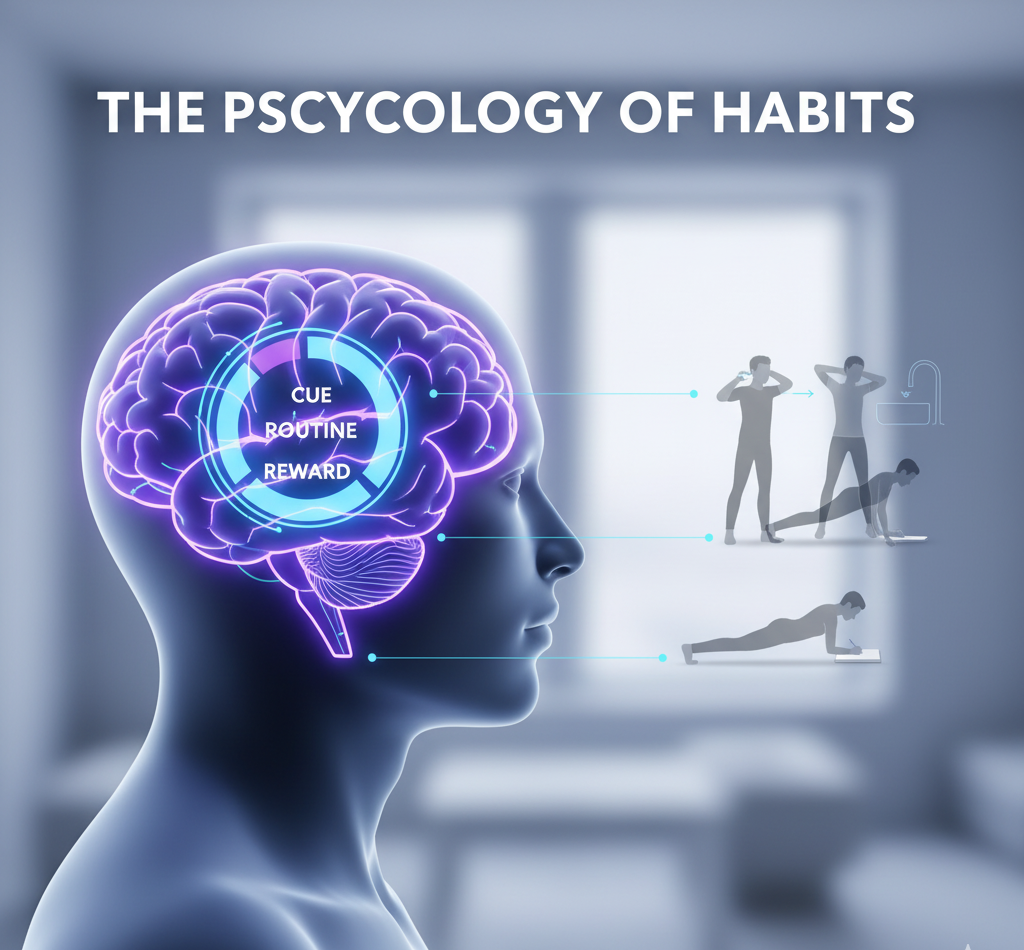
Before exploring how habit stacking works, it is important to understand what a habit actually is. A habit is a behavior that becomes automatic through repetition. When the brain recognizes that a particular action consistently follows a specific situation, it begins to automate that action to conserve mental energy.
Psychologists often describe habits through a three-part loop consisting of a cue, a routine, and a reward. The cue is the trigger that initiates the behavior. The routine is the action that follows the cue. The reward is the positive outcome or feeling that reinforces the behavior and encourages the brain to repeat it.
Consider a simple everyday example. A person wakes up in the morning and immediately checks their phone. Waking up acts as the cue, checking the phone becomes the routine, and the reward might be entertainment, information, or social interaction. Because the behavior produces a satisfying outcome, the brain strengthens the connection between the cue and the routine.
Over time, the behavior becomes automatic. The person may check their phone every morning without consciously deciding to do so.
This automation is controlled by a part of the brain called the basal ganglia, which specializes in storing repetitive behavioral patterns. Once a habit becomes embedded in this system, it requires very little conscious thought to perform.
The challenge with habits is that creating entirely new routines requires significant mental effort because the brain must build fresh neural pathways. Habit stacking solves this problem by attaching new behaviors to pathways that already exist.
The Concept of Habit Stacking

Habit stacking is a strategy that pairs a new habit with an existing one so that the existing habit becomes the trigger for the new behavior. Instead of attempting to build a habit from scratch, you attach it to a routine that already occurs reliably in your daily life.
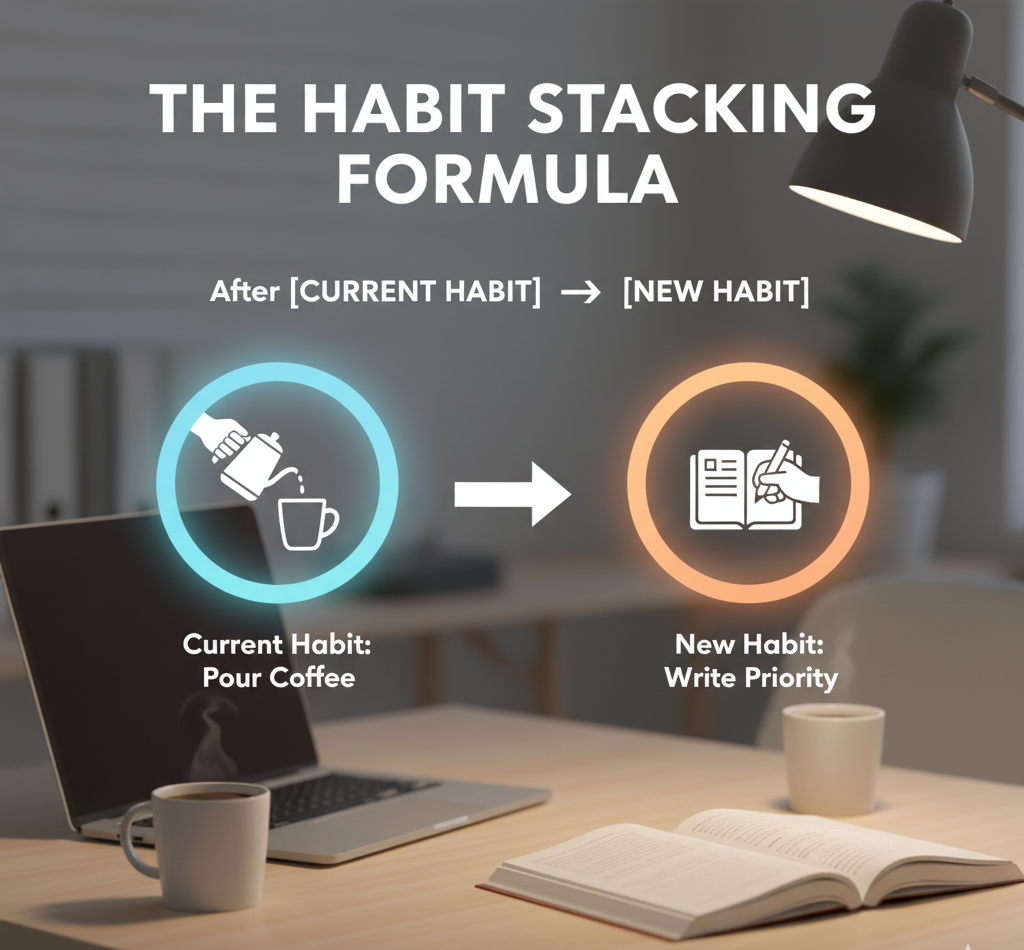
The formula for habit stacking is simple but powerful. After performing a current habit, you immediately perform a new habit.
For example, after brushing your teeth, you might drink a glass of water. After pouring your morning coffee, you might write down the most important task you want to accomplish that day. After finishing dinner, you might review your goals or read a few pages of a book.
These combinations may appear small, but their impact grows over time. Because the anchor habit already happens automatically, the brain begins to associate the new behavior with the existing routine.
Gradually, the two actions become connected in memory, forming a chain of behaviors that occur naturally without requiring extra motivation.
This is why habit stacking for daily success is so effective. It transforms isolated actions into structured routines that flow smoothly throughout the day.
The Neuroscience: What Happens Inside Your Brain
Modern neuroscience provides fascinating insights into why habit stacking works so well. When you repeat a behavior consistently, the brain strengthens the neural connections associated with that behavior through a process known as neuroplasticity.
Neuroplasticity refers to the brain’s ability to reorganize itself by forming and strengthening connections between neurons. Every time you repeat a specific action, the neural pathway associated with that action becomes stronger and more efficient. Eventually, the pathway becomes so well established that the behavior feels effortless.
Existing habits already have strong neural pathways inside the basal ganglia. These pathways function like superhighways that allow the brain to execute routines quickly and automatically.
When you attach a new habit to an existing routine, you are essentially extending that neural highway rather than building a new road from scratch.
Another important neurological process involved in habit formation is synaptic pruning. The brain constantly evaluates which neural connections are used frequently and which are rarely activated. Connections that are not used regularly weaken and eventually disappear, while frequently used pathways become stronger.
Habit stacking takes advantage of this process. Because the anchor habit occurs regularly, the new habit attached to it is also repeated frequently. This repetition signals to the brain that the pathway is important, strengthening the connection over time. Eventually, the stacked habit becomes part of the same automatic routine.
Self-directed neuroplasticity also plays a role. This concept describes the brain’s ability to reshape itself through intentional actions and repeated behaviors. By consciously choosing beneficial habits and stacking them onto existing routines, you are effectively training your brain to operate in a more productive way.
The Dopamine Engine: Why Habit Stacking Feels Rewarding
Another key factor in habit stacking for daily success is the brain’s dopamine system. Dopamine is often described as the brain’s reward chemical, but modern research reveals that it also plays a crucial role in motivation, anticipation, and learning.
When the brain predicts that a certain action will lead to a rewarding outcome, dopamine levels increase. This surge of dopamine motivates you to perform the behavior and reinforces the connection between the cue and the routine.
Recent research in behavioral neuroscience suggests that dopamine release is strongly influenced by prediction. When the brain learns that a particular cue consistently leads to a positive experience, it begins to anticipate the reward even before the action occurs.
This process is sometimes described as action prediction error. When an outcome becomes predictable, the brain gradually reduces the amount of conscious effort required to perform the behavior.
This is why habit stacks eventually feel effortless. The brain learns the sequence of actions and executes them automatically.
Another useful principle for designing habit stacks is known as the Premack principle. This principle states that a behavior you enjoy can reinforce a behavior you find less appealing.
For example, if you enjoy listening to music or podcasts, you might pair that activity with a daily walk or workout. The enjoyable activity becomes the reward that encourages you to perform the more challenging task.
Using this principle within habit stacking allows you to create routines that feel rewarding rather than burdensome.
The Habit Stacking Formula
While the original habit stacking formula remains simple, modern productivity strategies often include additional elements that strengthen the routine.
#1. The classic formula can be expressed as follows. After a current habit, I will perform a new habit. For example, after I brush my teeth, I will drink a glass of water. However, many experts now recommend adding an identity-based reinforcement or micro reward to strengthen the behavior.
#2. A more refined formula might look like this. After I pour my morning coffee, I will write down one priority for the day because I am a focused and organized professional. This identity statement reinforces the behavior by aligning it with how you see yourself. When habits reflect your personal identity, they become easier to maintain. Even a very small habit can reinforce a powerful identity shift.
Someone who writes a single sentence every day may begin to see themselves as a writer. A person who performs two minutes of stretching every morning begins to identify as someone who takes care of their health. Over time, these identity shifts strengthen the consistency of the habit.
Real World Examples of Habit Stacking
The beauty of habit stacking lies in its flexibility. It can be applied to nearly every area of life, from productivity and learning to health and personal development.
#1. Consider someone who wants to read more books but struggles to find time. Instead of scheduling long reading sessions, they might create a small habit stack. After getting into bed each night, they read five pages of a book.
Because getting into bed already happens every night, the reading habit becomes naturally attached to that routine.
#2. Another example involves productivity at work. After opening their laptop each morning, a professional might immediately review their top three priorities for the day.
This simple habit stack ensures that the workday begins with clarity and direction.
Health routines can also benefit from stacking. After brushing their teeth in the morning, someone might perform two minutes of stretching. Although the exercise is short, repeating it daily establishes a consistent health habit that can expand over time.
Learning routines can be built similarly. After finishing lunch each day, someone might spend ten minutes studying a new skill or reading educational material.
Small actions like these accumulate over time and lead to significant personal growth.
Best Tools for Habit Stacking in 2026
Technology can support the process of habit stacking by helping you track routines and maintain consistency. Several tools have become popular among individuals focused on productivity and personal growth.
#1. AI-powered habit builders are gaining attention because they help users design routines based on behavioral psychology principles. Some applications allow users to describe their goals and receive personalized habit stacking systems built around their existing routines.
#2. Gamified habit tracking tools also remain popular because they transform daily routines into progress-based systems that feel rewarding. By visualizing streaks and milestones, these platforms reinforce consistency and motivate users to maintain their habit stacks.
#3. Minimalist tracking tools appeal to individuals who prefer simplicity. These tools focus on visual streaks and daily reminders without overwhelming users with complex features.
Regardless of the technology used, the underlying principle remains the same. The tool supports the system, but the power of habit stacking comes from the routine itself.
Why Habit Stacks fails sometimes
#1. Overstacking too many habits at once: Although habit stacking is highly effective, it can fail when too many habits are attached to a single anchor at the same time. Attempting to add several new behaviors to one routine often creates overwhelm, making the entire stack difficult to maintain. When the brain perceives the task as complex or demanding, motivation quickly drops, and inconsistency follows. A more effective strategy is to begin with one small habit and allow it to become automatic before gradually adding additional layers to the stack.
#2. Choosing unreliable anchor habits: Another common mistake involves selecting anchor habits that do not occur consistently in everyday life. Habit stacking relies on predictable cues, and if the anchor behavior happens irregularly, the new habit will not be triggered reliably. Strong anchors are routines that occur naturally every day without fail. Examples include waking up in the morning, brushing your teeth, making coffee, eating meals, or shutting down work at the end of the day. These consistent routines provide a dependable foundation for building new behaviors.
#3. Using vague or unclear triggers: Vague cues can significantly weaken habit stacks because the brain responds best to clear and specific signals. A statement such as doing something when you have time leaves too much room for interpretation and often results in procrastination. Habit stacking works best when the new behavior is connected to a precise action that already occurs. For instance, saying that you will read one page of a book after pouring your morning coffee provides a clear cue that the brain can easily recognize and follow.
#4. Lack of patience during the habit-building process: Patience is another critical factor that many people underestimate. Even though habit stacking simplifies behavior change, it still requires consistent repetition for the brain to strengthen neural pathways associated with the new behavior. The process of integrating a habit into daily life takes time because the brain gradually reinforces the routine through repeated actions. Staying consistent over several weeks or months allows the habit to move from conscious effort into automatic behavior, which is the ultimate goal of habit stacking.
Conclusion: habit stacking for daily success
Habit stacking for daily success is not about radical lifestyle changes or overwhelming productivity systems. It is about understanding how the brain forms habits and using that knowledge to design routines that work naturally with your biology.
By attaching new habits to existing routines, you reduce resistance, strengthen neural pathways, and gradually transform small actions into powerful daily systems.
ALSO READ: Top 10 Best Fitness Trackers That Improve Health
In a world filled with distractions and constant demands for attention, simple strategies like habit stacking offer a practical way to regain control of your time, energy, and focus.
Over time, these small, stacked habits compound into meaningful improvements in productivity, health, learning, and personal fulfillment.
Success rarely comes from dramatic single moments of change. It is built through small actions repeated consistently over long periods of time.
When those actions are structured through habit stacking, daily success becomes not just possible but inevitable.
