



It is very fascinating how fast and amazing Technology has evolved. Smart glasses, for example startsed bulky, expensive, and limited to early adopters, then slowly they became lighter, smarter, and seamlessly integrated into everyday life. Smartphones replaced feature phones. Smartwatches brought notifications to our wrists. Now, as we move deeper into 2026, the conversation is shifting toward something even more immersive and intuitive. The rise of Smart Glasses is no longer a futuristic concept pulled from science fiction or a James Bond movie, but it is happening right in front of us.
If you are researching the Best Smart Glasses available today, you are likely curious about how they work, whether they are worth the investment, and how they fit into daily life. Maybe you are a tech enthusiast eager to try the latest wearable innovation. Perhaps you are a professional looking for productivity tools that go beyond your phone and laptop. Or maybe you simply want stylish eyewear that does more than correct your vision.
In this guide, we will explore the Best Smart Glasses in 2026, what they are, how Smart Glasses technology has evolved, which models are leading the market, and how to choose the right pair for your needs. By the end of this article, you will not only understand the technology behind these devices but also feel confident about whether they deserve a place in your everyday routine.
What are Smart Glasses
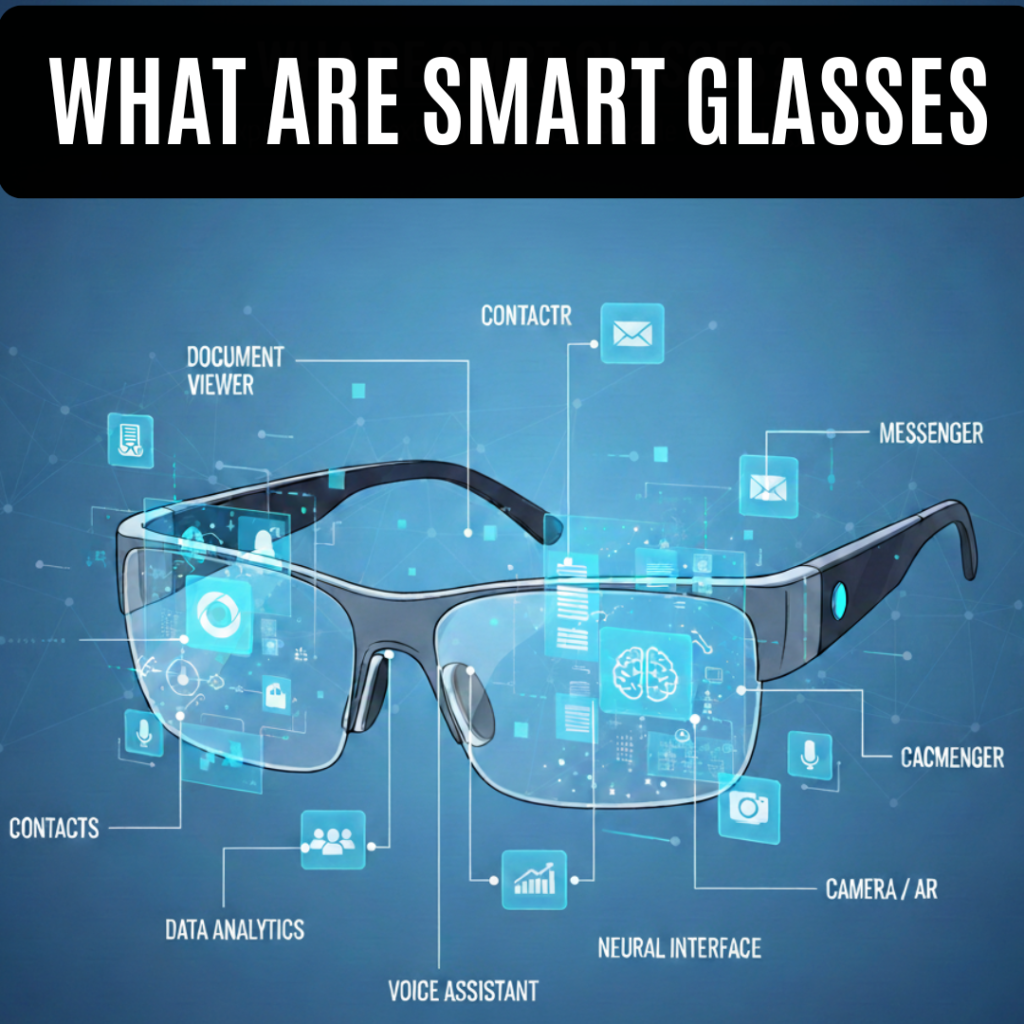
Before going into the Best Smart Glasses on the market, it helps to clarify what Smart Glasses actually do. At their core, Smart Glasses are wearable devices designed to provide digital information directly in your field of vision or through integrated audio features. Unlike traditional glasses, they contain embedded technology, such as micro-displays, cameras, speakers, microphones, and connectivity components.
Some Smart Glasses focus primarily on augmented reality, projecting digital elements like navigation arrows, notifications, or 3D objects onto the real world. Others emphasize audio experiences, allowing users to listen to music, take calls, and interact with voice assistants without blocking out environmental sounds. Some models prioritize content creation, offering built-in cameras for hands-free video recording and live streaming.
The Best Smart Glasses strike a careful balance between functionality, comfort, and style. Early versions often looked bulky and awkward, but today’s designs resemble regular eyewear, making them more socially acceptable and practical for everyday use.
Key Features That Define the Best Smart Glasses
When evaluating the Best Smart Glasses, several features determine overall quality and usability. Display technology is one of the most important. High-resolution micro displays that blend seamlessly with your natural view create a more immersive and comfortable experience. The best models offer adjustable brightness levels to ensure visibility in both bright sunlight and indoor settings.
Audio quality is another critical factor. Many Smart Glasses now use open-ear speakers built into the frame, delivering clear sound while keeping you aware of your surroundings. This is particularly useful for commuters, cyclists, and pedestrians who need situational awareness.
Battery life continues to improve, with some of the Best Smart Glasses offering up to eight hours of mixed usage. Fast charging capabilities also make it easier to top up power during short breaks.
Connectivity is essential as well. Seamless pairing with smartphones via Bluetooth or Wi-Fi ensures notifications, calls, and apps sync effortlessly. Advanced models even support independent apps, reducing reliance on a connected phone.
Finally, comfort and style play a significant role. The most successful Smart Glasses look like normal eyewear. Lightweight materials, customizable lenses, and prescription compatibility make them suitable for everyday wear.
Best Smart Glasses in 2026
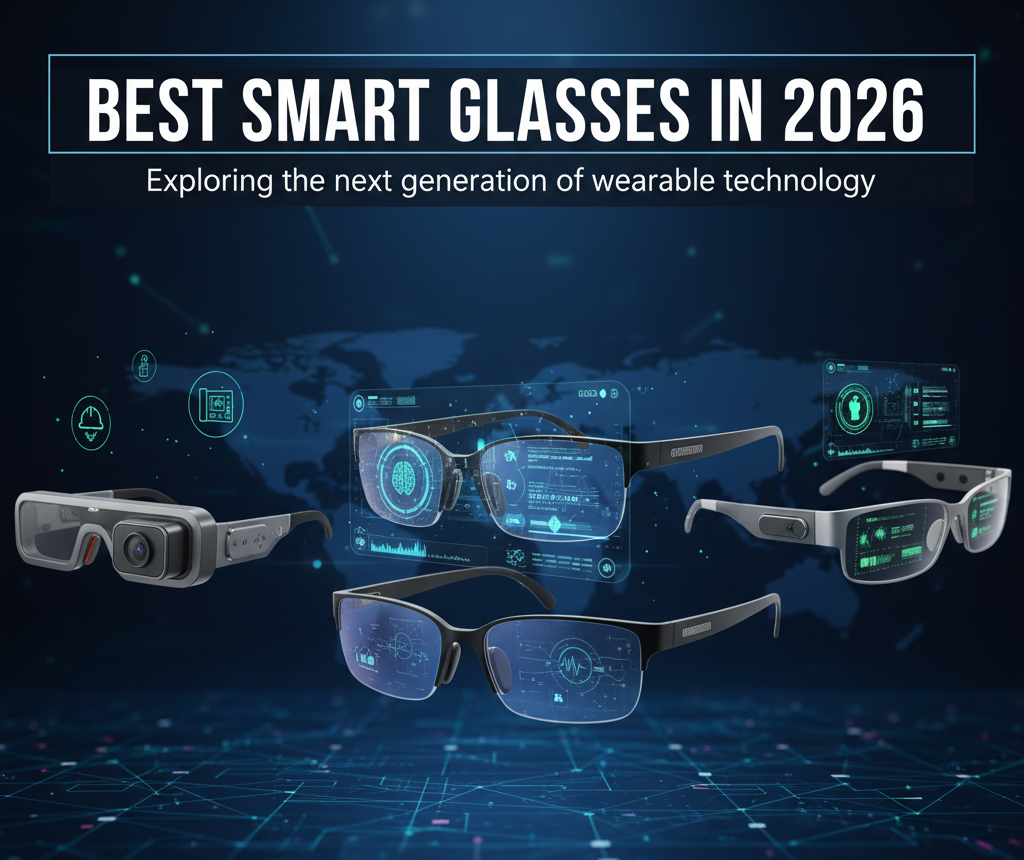
Several brands have positioned themselves at the forefront of wearable innovation. Each offers a unique approach to Smart Glasses, catering to different user preferences.
#1. Ray-Ban Meta Smart Glasses (Gen 2) are arguably the most recognizable smart eyewear on the market because they successfully merge classic fashion with powerful technology. These glasses look just like traditional Ray-Ban frames, but they integrate tiny high-resolution cameras, directional open-ear speakers, microphones, and a voice-activated AI assistant. Users can capture photos and video hands-free simply by speaking commands like “capture photo” or “record,” which makes them perfect for content creators who want spontaneous, real-life documentation without holding a phone.
The glasses also support livestreaming directly to social platforms, enabling creators to broadcast first-person footage in real time. Another appealing aspect is their natural audio experience: instead of earbuds, spatial speakers beam sound into your ears without blocking outside noise, so you stay aware of your surroundings. Connectivity to your smartphone allows you to manage notifications and calls via voice as well. In 2026, these glasses typically retail between $300 and $450, varying by frame style and storage options.
#2. Apple Vision Glass represents Apple’s more approachable and everyday version of wearable augmented reality. Unlike the immersive Vision Pro headset, Apple Vision Glass is lightweight and designed for everyday wear. The core value lies in AR overlays: information such as navigation arrows, messages, reminders, and contextual prompts appears superimposed in the user’s field of vision without taking over the entire visual environment.
They seamlessly pair with iPhones, Macs, and Apple Watches, allowing cross-device workflows like viewing calendar events, replying to messages via dictation, or translating text seen through the lenses. Apple leverages its device ecosystem and privacy features, ensuring that sensitive data is processed securely with on-device intelligence whenever possible. Spatial audio enhances voice assistant interactions and media playback. Because much of the heavy processing is offloaded to tethered iPhones, the glasses remain thin and comfortable. In 2026, Apple Vision Glass is typically priced between $900 and $1,300, reflecting premium components and ecosystem integration
#3. Xreal Air 2 Pro is engineered for immersive media rather than social capture or productivity. These glasses act as a portable personal theater by projecting a large virtual screen, which is equivalent to watching a 100-inch display from several meters away, while you hold minimal hardware on your face. When connected to a smartphone, laptop, or gaming console via USB-C, they create a private viewing experience for streaming movies, gaming, or even multitasking with virtual displays.
Their compact, feather-light design emphasizes travel convenience: you can slip them into a bag and use them on flights, in hotel rooms, or during breaks without needing a bulky headset. They rely on micro OLED displays and wide field-of-view optics to deliver crisp visuals, and integrated low-latency audio enhances immersion. There are no built-in cameras or strong AR features, as the focus is strictly on media consumption and productivity viewing. Estimated pricing for Xreal Air 2 Pro in 2026 is $400 to $550.
#4. Google AI Smart Glasses (2026 Edition) mark a significant reentry by Google into the smart eyewear space, with a strong emphasis on practical assistance rather than gimmicks. Google’s solution uses advanced AI and on-device sensors to interpret real-time context, offering features such as translation of spoken languages directly in your field of view, guided navigation cues when walking or driving, immediate access to search results tied to what you are looking at, and contextual reminders based on your schedule and location.
Unlike pure AR entertainment glasses, these prioritize usefulness in everyday life: you can glance at a street sign and instantly see translation overlays, get schedule reminders as you approach appointment locations, or receive object recognition tags when scanning products or landmarks. Integration with Google Assistant provides natural language interactions, and the glasses aim to be subtle rather than intrusive, blending digital insight with real-world experience. The 2026 price range for Google AI Smart Glasses is roughly $500 to $700.
#5. Samsung Galaxy Smart Glasses are designed primarily for users already immersed in Samsung’s ecosystem. Built to work seamlessly with Galaxy phones, tablets, and watches, these glasses display notifications, messages, turn-by-turn navigation, and multimedia controls directly in your line of sight. Unlike AR headsets, they focus on glances of information rather than full augmented reality overlays. For example, incoming messages can appear as discreet banners, while music controls and call alerts let you stay connected without stopping to reach for a phone.
Samsung emphasizes cross-device continuity, so features like SmartThings control or Bixby interaction work fluidly across systems. The glasses also support hands-free voice commands and contextual location triggers, where your calendar or routes can prompt AR cues at relevant moments. Industry estimates in 2026 suggest prices between $700 and $1,000.
#6. Snap Spectacles (AR Edition) represent the evolution of Snap’s social media–centric hardware. Instead of prioritizing professional productivity or enterprise features, these smart glasses deliver immersive AR experiences and creative tools tied to the Snapchat ecosystem. Users can overlay interactive 3D animations, games, filters, and lenses onto the real world, either for capturing enhanced Stories or engaging with AR experiences built by third-party developers.
The glasses include cameras, motion sensors, and spatial tracking to make AR objects feel anchored in real space, and a companion app lets creators design and deploy custom lenses. While not as productivity-oriented as Apple or Google offerings, Spectacles shine in social interactivity and AR play. In 2026, these glasses typically fall in the $400 to $600 range, depending on model and storage.
#7. Vuzix Blade 2 is positioned predominantly for enterprise and specialized professional use. These smart glasses include a small transparent display that projects information into the user’s line of sight while leaving the real world fully visible. Vuzix targets industries such as field service, manufacturing, logistics, and healthcare, where workers need hands-free access to data, workflows, checklists, and remote assistance.
The glasses accept voice or gesture input and connect to enterprise software platforms for secure data transmission. For instance, a technician repairing equipment can view step-by-step instructions without ever touching a device, or a remote supervisor can see what the field worker sees and provide guidance. Durability, security, and compatibility with business systems are core selling points. In 2026, Vuzix Blade 2 models are often priced between $1,200 and $2,000.
#8. Lenovo ThinkReality Glasses cater to business teams that want mobile AR productivity and secure collaboration. These glasses pair with PCs, mobile devices, or edge compute units to display AR dashboards, virtual monitors, data visualizations, or training modules directly in front of the user. Enterprises use them for remote training, simulation workflows, data analysis overlays, and collaborative sessions where participants share a virtual workspace.
The system supports gesture and voice control, allowing workers to interact with data without breaking workflow. Security features are robust, making them suitable for corporate environments where sensitive information is accessed in AR contexts. By 2026, Lenovo ThinkReality Glasses are commonly priced between $1,000 and $1,800, depending on configuration and enterprise licensing.
#9. Rokid Max AR Glasses strike a balance between consumer-grade affordability and decent AR capability. These glasses project virtual screens and simple AR overlays when connected to a smartphone or PC, making them versatile for video watching, light productivity, and educational use.
They don’t attempt the extensive AI integration of Google or Apple, instead focusing on high-brightness display panels, comfortable long-wear design, and responsive tracking. Users appreciate the clear visuals and solid ergonomics, especially for casual media or basic contextual prompts like navigation cues. Rokid’s ecosystem supports third-party apps and simple AR games, giving users flexibility without breaking the bank. Pricing in 2026 is around $350 to $500, making them one of the more cost-effective options on the list.
#10. Huawei Vision Glass rounds out the top-10 by serving users within Huawei’s connected device ecosystem. These smart glasses prioritize navigation cues, AI assistance, and contextual reminders, mirroring some of Google’s functional goals but optimized for Huawei hardware and software. By pairing with Huawei smartphones, they can intelligently overlay directions while walking or cycling, display notifications discreetly, and surface relevant AI tips based on calendar events or location.
Spatial audio enhances voice interactions with the AI, and careful power management allows for extended daily use. While ecosystem limitations exist in some regions due to app availability, Huawei’s hardware remains solid and competitive. In 2026, these glasses are priced at approximately $600 to $900.
Each of these models could reasonably be considered among the Best Smart Glasses depending on your priorities, whether they revolve around style, productivity, entertainment, or AI-powered assistance.
Why Smart Glasses Are Gaining Popularity in 2026
Several factors have contributed to the rapid growth of Smart Glasses over the past few years. First, advancements in miniaturization have allowed manufacturers to pack powerful hardware into lightweight frames. Second, improvements in battery efficiency mean users can wear Smart Glasses for hours without constant recharging. Third, the expansion of artificial intelligence and voice assistants has made hands-free interaction more natural and intuitive.
Remote work and hybrid lifestyles have also accelerated demand. Professionals want tools that allow them to access information instantly without constantly checking their phones. Fitness enthusiasts appreciate hands-free tracking and navigation. Travelers value real-time translation and turn-by-turn directions displayed discreetly in their line of sight.
In 2026, Smart Glasses will no longer be niche gadgets for tech enthusiasts. They are becoming mainstream wearable devices that complement smartphones and smartwatches rather than replacing them.
How Smart Glasses Enhance Everyday Life
The real value of Smart Glasses becomes clear when you imagine how they integrate into your daily routine. Picture walking through a new city while subtle arrows guide you to your destination without forcing you to glance down at your phone. Imagine receiving a discreet notification about an important message while maintaining eye contact during a conversation.
For professionals, Smart Glasses can display meeting reminders, quick notes, or even teleprompter-style scripts during presentations. Remote technicians can access step-by-step instructions while keeping their hands free to complete tasks. Medical professionals can review patient information in real time.
Fitness enthusiasts benefit from heads-up displays showing pace, distance, and heart rate without interrupting their stride. Cyclists can follow navigation prompts safely. Travelers can rely on real-time translation subtitles when speaking with locals.
Content creators enjoy the ability to capture spontaneous moments from a first-person perspective, producing immersive footage that feels authentic and engaging.
These real-world applications illustrate why the Best Smart Glasses are more than just gadgets. They are tools designed to blend the digital and physical worlds seamlessly.
As Smart Glasses become more advanced, privacy concerns naturally arise. Built-in cameras and microphones can raise questions about consent and data security. Manufacturers have responded by adding visible recording indicators and enhancing encryption protocols.
When choosing among the Best Smart Glasses, it is important to understand how your data is stored and used. Reviewing privacy policies and adjusting settings can help protect personal information. Responsible usage also plays a key role. Being mindful of when and where you record ensures that wearable technology remains respectful and socially acceptable.
Battery Life, Performance, and Practical Limitations
Despite significant improvements, Smart Glasses still face limitations. Battery life, while better than previous generations, may not last an entire day of heavy use. Display brightness can sometimes struggle under intense sunlight. Some advanced features require stable internet connections.
Performance varies across models, especially in augmented reality capabilities. Higher-end options deliver smoother visuals and faster processing, but often come at a premium price.
Understanding these trade-offs helps set realistic expectations. The Best Smart Glasses are impressive, but they are not magic devices. They complement your smartphone and other gadgets rather than replacing them entirely.
How to Choose the Best Smart Glasses for Your Needs
Selecting the Best Smart Glasses begins with identifying your primary purpose. If you prioritize content creation and social media integration, a camera-focused model may be ideal. If productivity and augmented reality tools matter most, look for advanced display capabilities and seamless device integration.
Consider comfort carefully. Since Smart Glasses sit on your face for extended periods, weight and frame design are crucial. Prescription compatibility is another important factor if you wear corrective lenses.
Evaluate battery life based on your daily routine. Commuters and travelers may need longer-lasting devices, while casual users might prioritize design and style.
Budget also plays a role. Prices range widely, from relatively affordable audio-focused glasses to premium augmented reality devices. Determining how much value you expect to receive helps narrow your options.
The Future of Smart Glasses
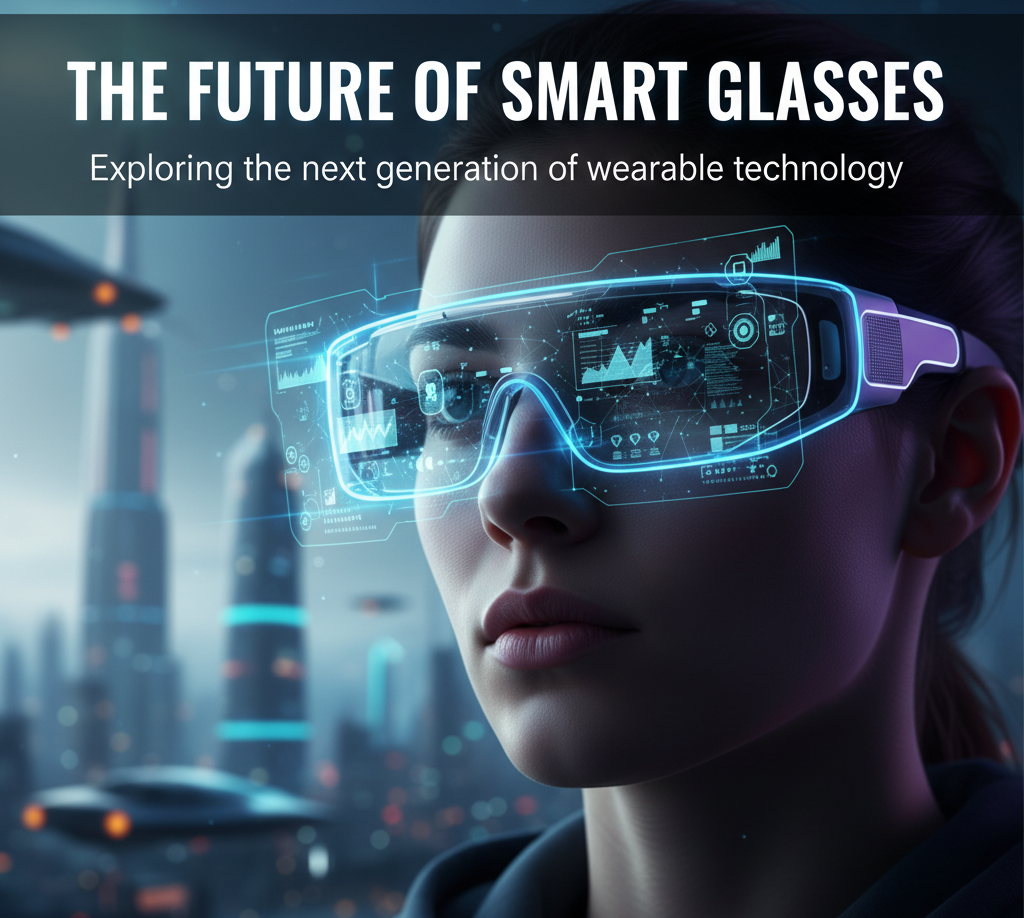
Looking ahead, the trajectory of Smart Glasses suggests even deeper integration with artificial intelligence and cloud computing. Future models may feature advanced gesture recognition, improved holographic displays, and longer battery life. As 5G and next-generation connectivity expand globally, real-time data processing will become faster and more seamless.
There is also growing interest in health monitoring features integrated into Smart Glasses, such as tracking eye movement, fatigue levels, or even early signs of certain medical conditions. This evolution could position Smart Glasses as both productivity tools and health companions.
As technology continues to shrink and become more energy efficient, Smart Glasses may eventually replace certain smartphone functions altogether. While we are not fully there yet, 2026 represents a pivotal moment in the wearable technology journey.
Conclusion: the Best Smart Glasses in 2026
The Best Smart Glasses in 2026 reflect years of technological refinement and user feedback. They are lighter, smarter, and more stylish than ever before. Whether you are drawn to immersive entertainment, hands-free productivity, or AI-powered assistance, there is likely a pair of Smart Glasses that aligns with your lifestyle.
As with any investment in technology, the key is clarity. Understand what you want these glasses to accomplish. Evaluate features carefully. Consider comfort, privacy, and long-term usability.
Smart Glasses are no longer experimental novelties. They are practical tools shaping how we interact with the digital world. If current trends continue, they may soon become as common as smartphones and smartwatches, quietly enhancing our lives in ways that feel both natural and transformative.
By choosing wisely and staying informed, you can position yourself at the forefront of this wearable revolution and experience firsthand why the Best Smart Glasses are defining the future of technology in 2026.
Related Post: Top 10 Best Fitness Trackers That Improve Health
