



There is a simple truth about online marketing that many businesses overlook: people trust people more than brands. As online audiences become smarter and more selective, traditional marketing is losing some of its power. Today, what truly wins attention is authenticity. This is why user-generated content has become a powerful tool for businesses that want to grow, build credibility, Trust, and improve visibility online. If you want to learn how to use user-generated content to boost SEO in 2025, you are in the right place.
Here are some of our popular posts: Top 10 best website builders, Best super foods for a healthy lifestyle, the unlimited list of free productivity apps, Best freelance site to find remote jobs, top 10 productivity hacks for entrepreneurs , 10 best side hustles to make extra money online, best online courses for learning digital skills, top 10 best free coding website
Before we get into the full details, here is something important to keep in mind. The biggest websites dominating search engines today are not only relying on professional content. They are also tapping into real stories, conversations, and contributions from their audience. And that is exactly what user-generated content offers. So let’s break everything down and show you how to use it the right way for better rankings, more traffic, and stronger brand authority.
What Is User-Generated Content, How It Gained Popularity, and How It’s Been Used

User-generated content, commonly called UGC, refers to any type of content created by real users, customers, or fans instead of the brand itself. This content shows up in different forms. Customer reviews. Photos and videos posted by customers. Testimonials. Social media comments. Forum answers. Blog comments. Customer stories. Product unboxing videos. TikToks. Instagram reels. Long-form posts or short feedback messages.
User-generated content has been around for a long time, but its popularity really took off for a few key reasons. First, social media changed the game. Platforms like TikTok, Instagram, Facebook, and YouTube made it so easy for anyone to create and share content that UGC became a natural part of online life. People were suddenly sharing their thoughts, photos, and videos every day, and brands noticed.
Second, audiences started getting tired of overly polished ads. Consumers crave content that feels real and relatable. They trust genuine experiences from actual users far more than messages crafted by a brand. This shift in mindset made UGC an incredibly valuable way for companies to connect with their audience on a human level.
Finally, search engines evolved, too. Google and other platforms began prioritizing content that reflects real-world experiences and trustworthiness. User voices add authenticity that brands simply cannot manufacture on their own, and search engines reward that.
Even before UGC became a marketing buzzword, businesses were finding ways to leverage it. E-commerce stores use customer reviews to build trust and boost product rankings. Restaurants started reposting customer photos to make their social media pages feel more personal and engaging. SaaS brands incorporated community questions and answers into their support pages to improve visibility. Influencers leveraged audience responses to increase engagement. Companies even turned real customer testimonials into ads.
With the rise of short-form video and AI-powered personalization, user-generated content is more important than ever. In 2025, any brand that wants to stand out and rank higher online needs to understand how to use user-generated content strategically to boost SEO and build authentic connections with its audience.
What Is SEO and Why Is It Important for Content?

SEO, or search engine optimization, is the practice of improving your website so that it ranks higher on search engines like Google. When your content appears on the first page of Google, you instantly get more visibility, more traffic, and more potential customers. Below are some of the SEO for content.
#1. It helps people find your business faster: SEO directly impacts how easily people can discover your business online. When your website and content are optimized for search engines, potential customers can find you quickly without having to dig through countless competitors’ pages. This visibility is crucial in a crowded digital landscape where attention spans are short.
#2. It brings in organic traffic that you do not have to pay for: SEO attracts visitors naturally through search results rather than paid ads. This is a cost-effective way to drive consistent traffic over time. Unlike paid campaigns, organic traffic continues to flow as long as your content remains relevant and optimized, providing long-term marketing benefits.
#3. It positions you as an authority in your industry: Consistently ranking high for relevant search terms signals to users that your brand is knowledgeable, trustworthy, and credible. Being recognized as an authority encourages people to engage with your content, follow your brand, and ultimately become loyal customers.
#4. It increases trust and credibility: Users tend to trust websites that appear on the first page of search results more than those buried deeper. High visibility communicates reliability and professionalism, which builds confidence among potential customers and improves conversion rates.
#5. It helps you compete with brands that have larger advertising budgets: Even without a significant ad spend, SEO enables your content to reach the right audience. By optimizing keywords, creating quality content, and building authority through backlinks and engagement, you can effectively compete with larger brands in your niche.
For any content to rank well, Google looks at relevance, experience, expertise, and trust. This is where user-generated content shines. When used properly, UGC sends strong trust signals to search engines, helping your content become more discoverable.
10 Advantages of Using User-Generated Content to Boost SEO
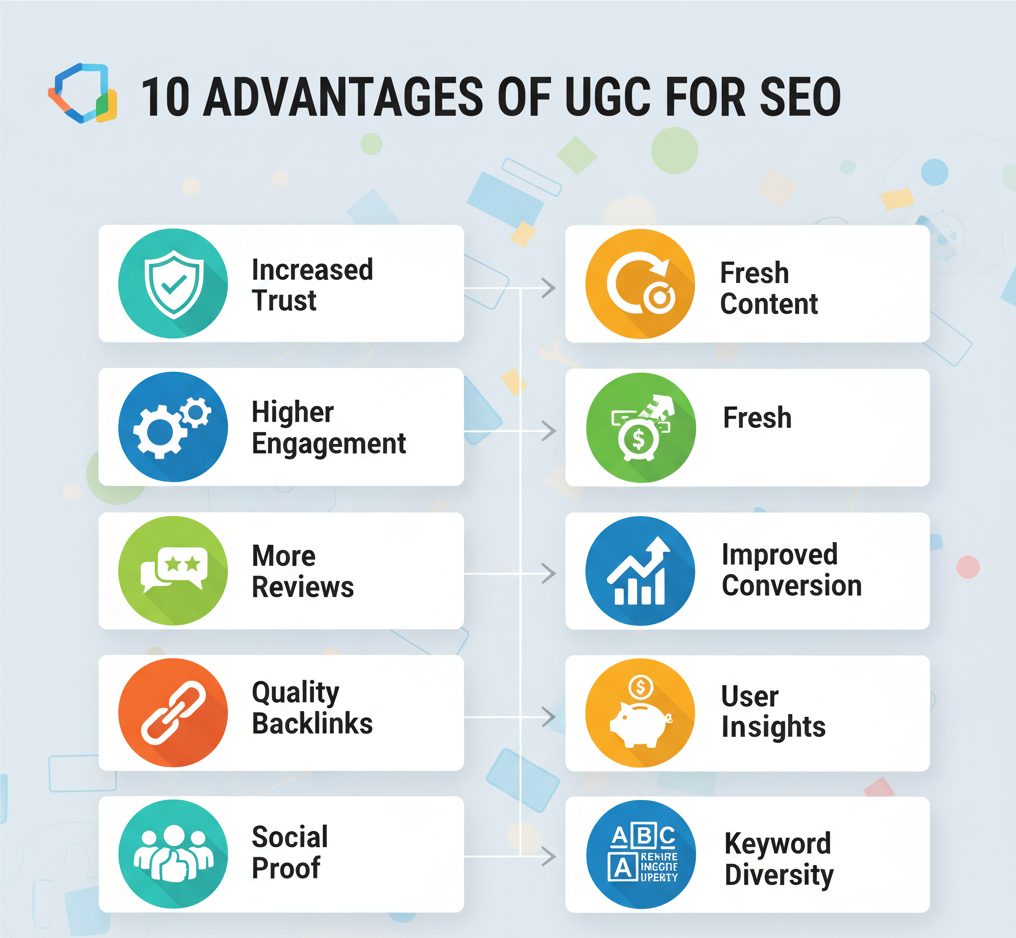
If you want to use user-generated content to boost SEO, it is important to understand why UGC works so well. Below are ten powerful advantages.
#1. Higher authenticity: User-generated content shows that real people are interacting with your brand. Search engines and potential customers both value authentic experiences. When Google sees genuine reviews, testimonials, or comments, it considers your site more trustworthy, which can positively impact rankings.
#2. More fresh content: UGC provides a continuous stream of new material for your website. Every time a customer leaves a review, posts a photo, or submits a comment, your site gains updated content. Fresh content signals to search engines that your site is active and relevant, which can improve SEO performance.
#3. Increased engagement rates: Pages with UGC often get longer time-on-page, more interactions, and repeated visits. These engagement metrics indicate to search engines that your content is valuable, which can help boost rankings and visibility.
#4. Improved keyword diversity: Users naturally use a variety of words, phrases, and questions when contributing content. This keyword diversity helps your website appear for more search terms without forcing unnatural keyword insertion, improving your organic reach.
#5. Better local SEO: For businesses with a physical presence, UGC, like local reviews, photos, and check-ins, can enhance local search rankings. Google favors businesses that have real engagement from local users, which makes your brand easier to find in location-based searches.
#6. Higher conversion rates: Customers trust other customers more than brand advertisements. Positive reviews, testimonials, and real user stories increase confidence in your products or services, leading to higher conversion rates. These signals indirectly support SEO because search engines reward content that drives user satisfaction.
#7. Lower content creation costs: Instead of producing all content yourself, UGC allows your audience to generate valuable material for your brand. This saves money and resources while allowing you to publish more content consistently, which is important for SEO.
#8. Stronger social proof: UGC demonstrates that real people are actively engaging with your brand. Social proof builds trust among potential customers and encourages them to take action. Search engines also recognize this interaction as a sign of a valuable, relevant website.
#9. Increased backlink opportunities: When users create content such as reviews, social media posts, or blog mentions, it can naturally generate backlinks to your website. Backlinks remain one of the strongest ranking factors for SEO, and UGC provides a steady source of them.
#10. Better customer insights: User contributions reveal what matters to your audience, including pain points, preferences, and frequently asked questions. These insights allow you to create content that aligns with actual search intent, improving relevance and boosting SEO performance.
Things to Look Out for When Using User-Generated Content

While UGC is powerful, you must use it correctly. Here are the main things to keep in mind.
#1. Quality control: Not all user-generated content is useful or relevant. Some reviews, comments, or posts may be poorly written, off-topic, or misleading. Maintaining quality ensures that the content adds value to your website and strengthens SEO rather than detracting from it.
#2. Copyright and permission: Always make sure you have the legal right to use content created by others. Images, videos, and text submitted by users may be copyrighted. Using them without permission can lead to legal issues and even penalties that could harm your website’s reputation and search rankings.
#3. Avoid fake reviews: Fake or manipulated reviews can harm your credibility and negatively impact SEO. Search engines are increasingly able to detect spammy or deceptive content. Only showcase genuine contributions to maintain trust with both users and search engines.
#4. Misleading or harmful statements: Sometimes users may exaggerate, misrepresent, or provide inaccurate information about your products or services. Monitoring content ensures that misleading statements do not confuse other visitors or damage your brand image.
#5. Offensive or inappropriate content: User submissions can occasionally include inappropriate language, hate speech, or other offensive material. Moderation is crucial to protect your brand, maintain a safe environment for your audience, and avoid search engine penalties for harmful content.
#6. Security risks: Allowing users to upload files or media without proper safeguards can expose your website to malware or security threats. Implement secure content submission methods and filtering systems to prevent potential breaches.
#7. Consistency: User-generated content should align with your overall brand message and voice. Random, chaotic, or off-topic contributions can confuse your audience and weaken your SEO strategy. Curate and integrate content thoughtfully to maintain consistency.
#8. Privacy and data protection: Respect users’ privacy when collecting content. Comply with data protection laws and platform guidelines. Always be transparent about how user data and submissions will be used to avoid legal issues and maintain trust.
Step-by-Step Guide on How to Best Use User-Generated Content to Boost SEO

Now let’s get practical. Here is a clear, step-by-step process you can follow to use user-generated content to boost SEO effectively in 2025.
#1. 2Identify the type of user-generated content you want: Decide what kind of content will best serve your SEO goals. This could include customer reviews, testimonials, photos, videos, blog comments, questions and answers, or social media posts. Start with a few formats that are easy to manage and align with your audience’s preferences.
#2. Choose the right platforms for collecting content: Determine where your users are most active. Social media platforms like Instagram, TikTok, Facebook, and YouTube are great for visual content. Google Reviews, blog comments, and community forums work well for text-based content. Selecting the right platforms ensures a steady flow of relevant contributions.
#3. Encourage users to participate: Motivate your audience to create content by offering incentives, contests, or recognition. Simple gestures like discounts, shoutouts, or entry into a giveaway can significantly increase participation and the quality of submissions.
#4. Use hashtags and branded tags: Create a unique, memorable hashtag for your brand and encourage users to use it in their posts. This makes tracking and gathering UGC easier while also improving brand visibility across social media platforms.
#5. Integrate UGC into your website: Showcase user content strategically on your site. Place reviews, photos, videos, and testimonials on product pages, landing pages, blogs, and the homepage. Integration not only enhances user experience but also strengthens SEO signals by adding fresh, relevant content.
#6. Optimize UGC for search engines: Ensure all user content is SEO-friendly. Add relevant keywords naturally, write descriptive meta descriptions, include alt text for images, and use schema markup for reviews or ratings. Proper optimization helps search engines understand and index the content effectively.
#7. Monitor quality and accuracy: Regularly review user submissions to ensure they are accurate, safe, and appropriate. Remove spam, irrelevant content, or anything that could harm your brand. Quality control maintains credibility and supports better search engine rankings.
#8. Repurpose UGC across multiple channels: Maximize the value of UGC by turning it into social media posts, blog features, advertisements, or email campaigns. Repurposing extends the reach of user content and reinforces SEO benefits by creating multiple entry points for traffic.
#9. Showcase real customer stories: Highlight in-depth experiences, success stories, or case studies from real users. Storytelling resonates with audiences, increases engagement, and boosts metrics like time-on-page, which positively influence SEO rankings.
#10. Analyze results and refine your strategy: Track metrics such as engagement, traffic, rankings, conversions, and content performance. Use insights to adjust your UGC campaigns, improve content quality, and focus on formats that generate the best SEO outcomes.
#11. Encourage ongoing participation: UGC works best as a continuous strategy. Keep your audience engaged by launching new campaigns, challenges, or content themes regularly. A consistent flow of contributions ensures your website remains active and relevant in the eyes of search engines.
#12. Maintain authenticity: Always prioritize genuine, organic user content over manipulated or forced submissions. Authenticity builds trust with your audience and sends strong positive signals to search engines, helping your site rank higher naturally.
Conclusion: Use User-Generated Content to Boost SEO
Throughout this article, we explored what UGC is, why SEO matters, the many advantages of using user-generated content to boost SEO, and the precautions you need to take to maintain quality and credibility. We also provided a step-by-step guide to help you implement UGC strategically, from identifying the type of content to encouraging participation, optimizing it for search engines, and continuously analyzing performance.
Here are some of our popular posts: Top 10 best website builders, Best super foods for a healthy lifestyle, the unlimited list of free productivity apps, Best freelance site to find remote jobs, top 10 productivity hacks for entrepreneurs , 10 best side hustles to make extra money online, best online courses for learning digital skills, top 10 best free coding website
In 2025, the brands that dominate search engines are those that know how to use user-generated content to boost SEO genuinely and strategically. UGC provides authenticity, trust, fresh content, more engagement, and a wide variety of natural keywords that help your website rank better. When used correctly, it also strengthens your brand identity and builds a loyal community of engaged followers.
User-generated content is a key element for websites and social media pages. In 2025, it will have become a critical tool for businesses that want to improve visibility, build trust, and rank higher on search engines. By encouraging real users to share their experiences, reviews, photos, videos, and stories, you create a wealth of authentic content that search engines love and audiences trust.
The key takeaway is that UGC works best when it is authentic, well-integrated, and optimized. Start small, focus on quality, and gradually scale your campaigns. Showcase your users’ voices, repurpose their content, and leverage it across your website and social media channels to maximize its impact.
Now is the perfect time to begin implementing UGC as part of your SEO strategy. Encourage your audience to participate, optimize their contributions, and track the results. With consistent effort, you can turn user-generated content into a powerful engine for organic traffic, higher engagement, and stronger brand authority.
If you found this guide helpful, keep exploring our blog for more in-depth strategies, tips, and tutorials on digital marketing, SEO, and growth strategies for your business. There’s a wealth of content waiting to help you take your online presence to the next level.
