



Welcome to our blog, where we post well-researched and rich content around lifestyle, health, finance, and general topics to make your overall life better for both returning and new readers. Over the past decade, the world of nutrition, health, and wellness has been transformed by research into the timing of meals rather than just what we eat. Among the most discussed and practiced methods are Circadian Fasting and Intermittent Fasting. Both approaches have millions of followers around the world and are backed by scientists, clinicians, and wellness influencers. But as we move further into 2026, the question many people are asking is this: What is better, Circadian Fasting and Intermittent Fasting?
Here are some of our popular posts: Top 10 best website builders, Best super foods for a healthy lifestyle, the unlimited list of free productivity apps, Best freelance site to find remote jobs, top 10 productivity hacks for entrepreneurs , 10 best side hustles to make extra money online, best online courses for learning digital skills, top 10 best free coding website
In this comprehensive article, we will unpack both methods in detail. We will explore what they are, how they work, the benefits and limitations of each, and finally provide a clear verdict based on recent science and expert opinion. Along the way, we will also offer practical tips to help you get the most out of whichever approach aligns with your lifestyle.
This is more than just nutrition theory. It’s about helping you understand two of the most influential fasting approaches in modern health and how they relate to real-world outcomes.
Understanding Circadian Fasting
Circadian Fasting is rooted in the body’s internal biological clock, also known as the circadian rhythm. This rhythm governs not only sleep and wake cycles but also hormone production, metabolism, digestion, and other physiological processes. Circadian Fasting aligns eating patterns with the day and night cycles that humans have evolved with over millennia.
The principle of Circadian Fasting is simple. You eat during daylight hours when your body is programmed to digest food most efficiently and avoid food after sunset or a set time in the evening. Most protocols recommend finishing your last calorie intake between two and four hours before bedtime and starting again after sunrise or a consistent morning time.
Proponents of Circadian Fasting argue that this approach restores harmony between eating and metabolic rhythms. By doing so, it optimizes energy utilization, supports hormonal balance, improves sleep quality, and enhances long-term metabolic health. The name itself is derived from this syncing of eating patterns with the circadian rhythm.
In practice, Circadian Fasting can vary by individual preference, but generally follows: A consistent start time in the morning. An end time in the early evening. No calorie intake late at night. Hydration and non-caloric beverages are allowed outside eating windows.
The strength of Circadian Fasting is that it mirrors natural biological patterns. Unlike some diets that focus only on calories, it emphasizes when to eat for optimal metabolic impact. Research in the last few years has revealed that eating late at night can disrupt glucose metabolism, increase insulin resistance, and raise inflammation markers. Circadian Fasting seeks to prevent these disruptions by respecting the body’s internal clock.
Understanding Intermittent Fasting
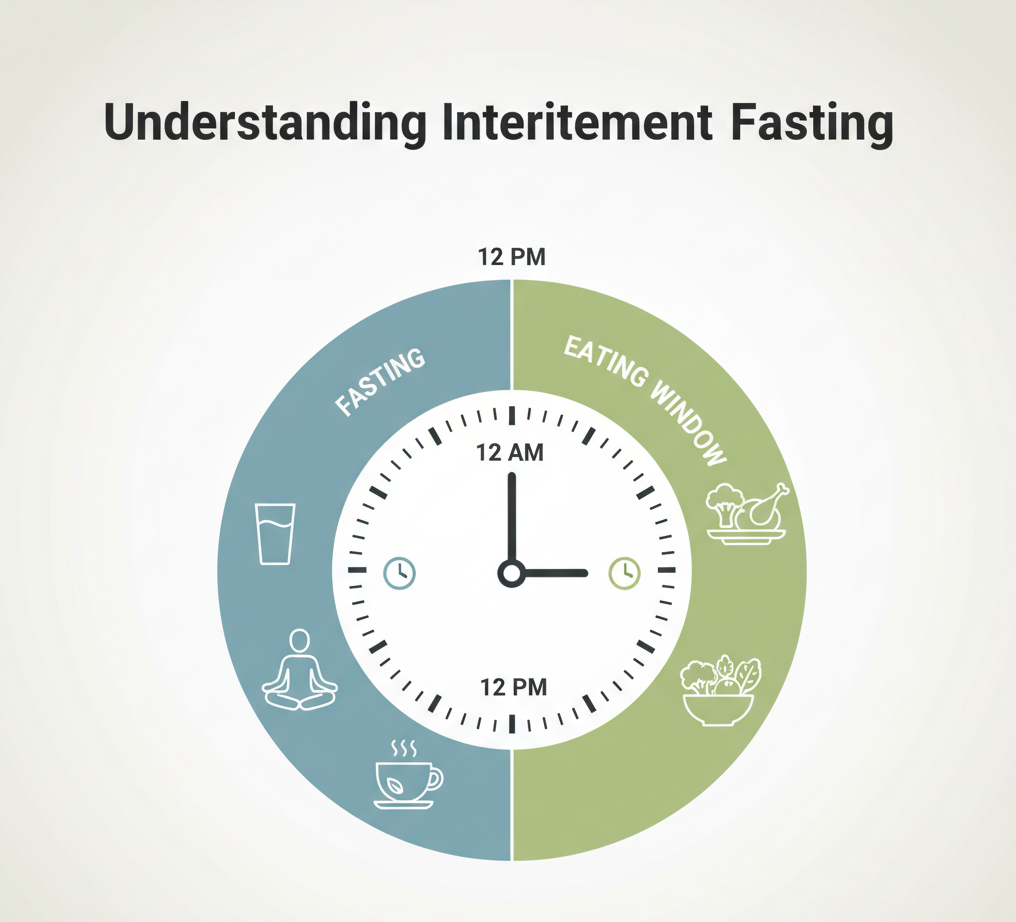
Intermittent Fasting, on the other hand, is a broader term that describes eating patterns that cycle between periods of eating and fasting. It does not necessarily prioritize time of day but rather the length of the fasting window. There are multiple types of Intermittent Fasting, and people often choose them based on lifestyle, goals, and individual preferences.
Common Intermittent Fasting protocols include:
Eating within a fixed window each day, for example, 16 hours fasting and 8 hours eating
24-hour fasts once or twice per week. Alternate-day fasting. Fasting with certain calorie limits on specific days
The most popular form of Intermittent Fasting remains the daily time-restricted eating pattern, where a person fasts for 14 to 18 hours daily and eats within a smaller window. The key concept is that the body enters a fasted state after digestion completes and begins metabolic processes such as fat oxidation and autophagy – a cellular cleanup mechanism associated with health benefits.
Intermittent Fasting has widespread appeal. It is adaptable and can be tailored to suit different schedules and lifestyles. There are no specific food restrictions attached to it, making it flexible for individuals with varying dietary patterns.
The mechanisms behind Intermittent Fasting involve extended fasting periods, which prompt the body to transition from glucose to fat for energy. Hormones such as insulin decrease, growth hormone increases, and metabolic pathways adjust to support improved energy utilization and cellular repair processes.
Intermittent Fasting has been studied extensively and linked with benefits ranging from improved metabolic health to longevity effects in some models. Critics argue that compliance can be challenging for some individuals, particularly those with irregular work patterns or high hunger sensitivity.
Comparing Circadian Fasting and Intermittent Fasting
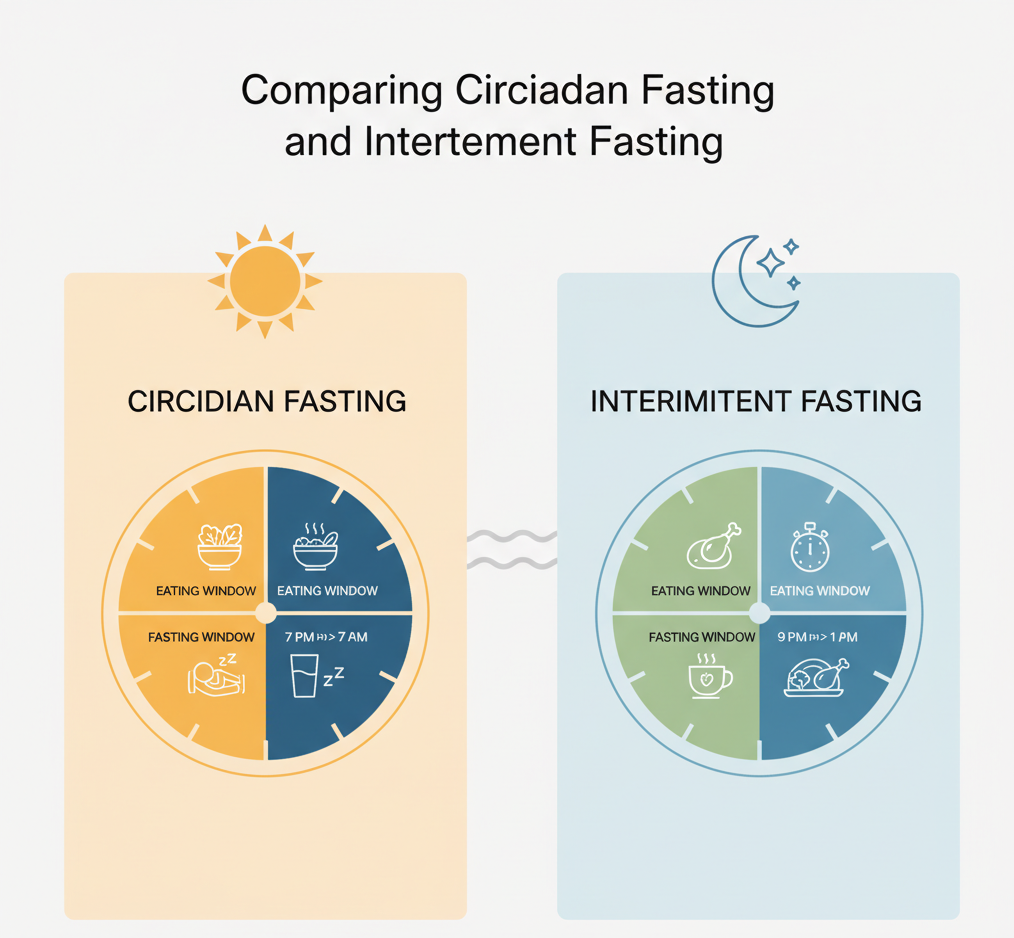
Both Circadian Fasting and Intermittent Fasting share the foundational concept of restricting eating windows. They are not mutually exclusive – in fact, Circadian Fasting can be viewed as a subset of time-restricted eating that emphasizes alignment with the body’s internal clock.
However, there are meaningful differences between the two approaches. Circadian Fasting emphasizes biological timing, while Intermittent Fasting emphasizes fasting duration. Let’s explore how they compare across multiple dimensions.
#1. Flexibility: Intermittent Fasting generally offers more flexibility in choosing fasting windows. Some people prefer fasting late into the morning; others may fast overnight and eat earlier in the evening. Circadian Fasting, by contrast, favors a more consistent schedule tied to daylight hours, which can be less flexible but more stable.
#2. Metabolic Alignment: Circadian Fasting intentionally aligns eating with circadian rhythms, which may enhance hormone regulation, sleep quality, and metabolic processes that depend on light-dark cycles. Intermittent Fasting does not inherently consider the time of day unless the chosen window coincidentally aligns with circadian cues.
#3. Ease of Tracking: Intermittent Fasting can require discipline, especially when managing prolonged fasting windows on busy schedules. Circadian Fasting can be easier to follow for people with regular routines because it mimics natural eating patterns tied to sunrise and sunset.
#4. Scientific Evidence: Both methods have scientific support. Intermittent Fasting has extensive research indicating benefits for weight management, insulin sensitivity, inflammation reduction, and cellular repair. Circadian Fasting is gaining robust support as research uncovers the metabolic consequences of eating at misaligned times. Evidence suggests that eating late at night may impair glucose tolerance, reduce sleep quality, and disrupt circadian gene expression.
#5. Sustainability: Sustainability varies by individual preferences. Some people find the rigid timing of Circadian Fasting more consistent in the long term. Others find Intermittent Fasting more adaptable because it does not mandate specific clock times.
With this context, we can list the key advantages and disadvantages of each.
5 Advantages of Circadian Fasting
#1. Circadian Fasting enhances metabolic harmony by aligning eating with biological rhythms. This can result in better glucose handling and reduced insulin resistance.
#2. This approach fosters better sleep. Eating late at night often interferes with sleep quality. By finishing eating early, Circadian Fasting supports restorative sleep cycles.
#3. Because it mirrors natural human patterns, it can be easier to maintain long-term for individuals with regular lifestyles.
#4. Studies increasingly show that eating in alignment with circadian rhythms supports heart health and reduces inflammation markers.
#5. Circadian Fasting can help regulate appetite hormones, leading to steadier hunger patterns and fewer cravings.
5 Disadvantages of Circadian Fasting
#1. It can be challenging for people who work night shifts or have irregular schedules. Aligning eating with daylight is easier for conventional schedules.
#2. Social eating occasions often happen at night, making strict adherence difficult in social contexts.
#3. For those in extreme latitudes where daylight hours vary widely across seasons, strict application may feel impractical.
#4. Individuals may experience initial hunger or fatigue as the body adjusts, especially if they are accustomed to late-night eating.
#5. Performance-oriented athletes or people with very high energy needs might struggle to meet nutritional requirements within condensed eating windows.
5 Advantages of Intermittent Fasting
#1. Intermittent Fasting is highly flexible. You can choose fasting windows that fit your lifestyle without being tied to sunlight hours.
#2. It has a large body of scientific evidence supporting metabolic benefits, including improved insulin sensitivity and fat metabolism.
#3. Many people find that it simplifies eating decisions, leading to easier calorie management without tracking every meal.
#4. Some forms of Intermittent Fasting are shown to support cellular repair processes such as autophagy, which is linked to long-term health benefits.
#5. It can be adapted for different goals, whether weight loss, metabolic health, longevity, or improved energy levels.
5 Disadvantages of Intermittent Fasting
#1. Intermittent Fasting may be difficult to sustain for people who struggle with hunger or who have irregular work schedules.
#2. There is a risk of overeating during eating windows, undermining the benefits if not managed carefully.
#3. Some individuals experience headaches, irritability, or low energy during initial adaptation phases.
#4. Those with specific medical conditions, such as diabetes or hormonal disorders, may need professional supervision to practice safely.
#5. Intermittent Fasting without consideration of food quality can lead to suboptimal nutrient intake even if the fasting duration is long.
Both approaches have strong merits but also particular limitations. Choosing between Circadian Fasting and Intermittent Fasting depends on lifestyle, goals, body responses, and personal preferences. To determine which is better, we must look at expert opinions and recent survey data.
Final Verdict on Circadian Fasting and Intermittent Fasting
In 2026, research in meal timing, circadian biology, and fasting protocols has matured significantly. Health experts widely agree that both Circadian Fasting and Intermittent Fasting offer real benefits. However, they also stress that adherence and personalization matter more than picking one over the other.
Recent expert surveys indicate that Circadian Fasting consistently improves metabolic rhythm markers such as blood glucose stability and sleep metrics. Clinicians note that aligning eating with natural day-night cycles lessens metabolic stress and supports hormonal balance.
Data from comparative trials suggests that for general population groups, Circadian Fasting may lead to slightly better outcomes in insulin sensitivity and sleep quality. Whereas Intermittent Fasting demonstrates stronger outcomes in fat loss and metabolic flexibility because of extended fasting windows.
Experts also emphasize that for individuals with highly variable schedules, Intermittent Fasting offers practical advantages without compromising core metabolic benefits.
In reality, there is no universal best. Research highlights that the best approach is one that you can sustain consistently while supporting your health goals. For some people, Circadian Fasting provides the structure needed to regulate eating patterns and improve sleep. For others, Intermittent Fasting creates a manageable rhythm that leads to measurable health improvements.
In professional circles, the consensus is that a hybrid strategy may be most effective for many individuals. For example, using an Intermittent Fasting approach that also respects circadian timing by avoiding late-night eating can harness benefits from both worlds.
This hybrid trend shows that flexibility and personalization are now core principles. In 2026, the best fasting practices are ones that are tailored to the individual rather than rigidly following one methodology.
Tips to Maximize Circadian Fasting and Intermittent Fasting
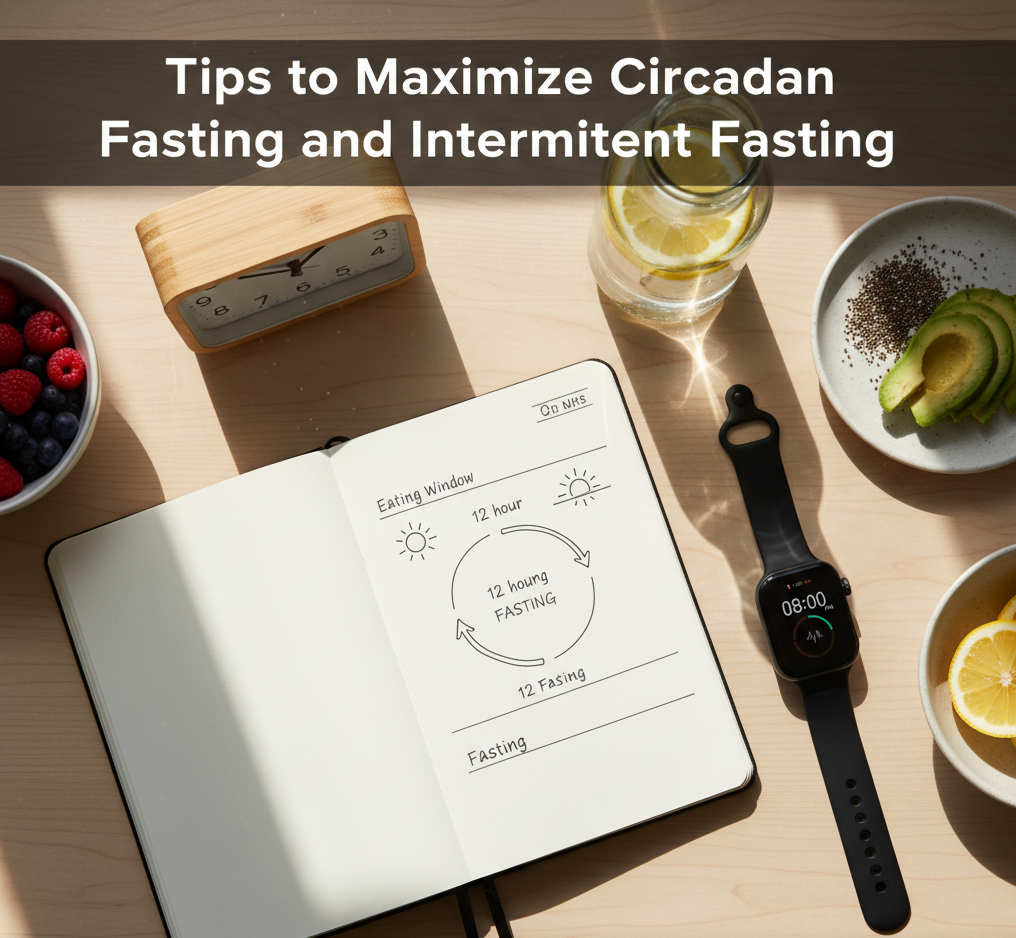
If you are considering Circadian Fasting and Intermittent Fasting, here are practical tips to get the most from your fasting journey.
Establish consistent eating windows that align with your lifestyle. Whether you choose a circadian pattern or intermittent fasting, consistency matters.
Prioritize nutrient quality. Fasting works best when meals are balanced with proteins, healthy fats, fiber, vitamins, and minerals.
Avoid late-night eating if possible. Even in Intermittent Fasting frameworks, aligning meals earlier in the day supports circadian health.
Hydrate well throughout the day. Water, herbal teas, and electrolytes help manage hunger and support metabolic processes.
Listen to your body. If you feel dizzy, excessively fatigued, or unwell, adjust your schedule or seek professional guidance.
Track your progress. Monitoring sleep quality, energy levels, mood, and metabolic indicators can help you refine your approach over time.
Consider consulting a nutrition professional if you have preexisting health conditions, are pregnant, or have specific performance goals.
Be patient. Most people experience adaptation periods. It may take a few weeks for your body to adjust to new eating patterns.
As with any health strategy, your experience will be unique. What matters most is finding an approach that supports your wellness goals without creating undue stress or social limitations.
Conclusion: Circadian Fasting and Intermittent Fasting
Circadian Fasting and Intermittent Fasting are both powerful approaches for improving health outcomes. They each offer distinct advantages in metabolic health, weight management, and overall well-being. The debate on what is better, Circadian Fasting and Intermittent Fasting, will continue as research evolves. But in 202,6 experts agree that approaching fasting with flexibility, personalization, and alignment with lifestyle yields the best results.
Here are some of our popular posts: Top 10 best website builders, Best super foods for a healthy lifestyle, the unlimited list of free productivity apps, Best freelance site to find remote jobs, top 10 productivity hacks for entrepreneurs , 10 best side hustles to make extra money online, best online courses for learning digital skills, top 10 best free coding website
Whether you choose to follow Circadian Fasting, Intermittent Fasting, or a blended strategy, the important thing is that you are informed and intentional. This article has unpacked the science, lived experience, and expert viewpoints so you can make the best decision for your health.
We post valuable content like this daily on our blog. If you found this article helpful, be sure to return for more insights on health science, nutrition strategies, and evidence-based wellness practices. Our mission is to help you live healthier with practical, research-backed information you can trust. Stay tuned for the next topic.
