



Welcome back to our blog, loyal readers, and a warm welcome to those discovering our blog for the first time. Here, we consistently share engaging and informative content designed to positively impact your life, covering everything from lifestyle, Personal improvements, DIY, finance tips, to gadgets, technology, and practical guides for modern living. Our goal has always been simple: to help you make smarter decisions, live better, and stay ahead in a fast-changing world.
Today, we are diving into a topic that continues to gain massive attention as remote work becomes the new normal. More people want the freedom to Work Remotely from Tropical Locations, and for good reason. However, alongside this growth come real challenges, including legal restrictions, compliance issues, and the temptation to rely on unethical shortcuts such as identity misrepresentation or excessive VPN use. We understand both the opportunities and the limitations that come with working remotely from tropical regions. That is why this guide focuses on showing you exactly how to Work Remotely from Tropical Locations legally in 2026, so you can enjoy the lifestyle benefits without risking your career, finances, or future mobility.
Here are some of our popular posts: Top 10 best website builders, Best super foods for a healthy lifestyle, the unlimited list of free productivity apps, Best freelance site to find remote jobs, top 10 productivity hacks for entrepreneurs , 10 best side hustles to make extra money online, best online courses for learning digital skills, top 10 best free coding website
The idea of answering emails with a view of palm trees, attending Zoom meetings with the sound of ocean waves nearby, and finishing workdays just in time for a sunset swim has gone from fantasy to reality for millions of professionals. In 2026, more people than ever want to Work Remotely from Tropical Locations, not as short-term tourists but as legally compliant, long-term remote workers.
Remote work has matured. Governments have adapted. Visa systems have evolved. Companies have learned how to manage distributed teams. At the same time, professionals are prioritizing lifestyle, flexibility, and mental well-being over traditional office routines. Tropical destinations, once seen only as vacation spots, are now global hubs for digital professionals.
This guide is written to help beginners and experienced professionals alike understand how to Work Remotely from Tropical Locations legally in 2026. It covers what remote work really means, why tropical destinations are so attractive, why legality matters more than ever, and a step-by-step roadmap anyone can follow.
What Remote Work Is, How It Works, and Why It Is So Popular in 2026
Remote work simply means performing your job outside a traditional office environment, usually using the internet, digital tools, and cloud-based systems. Instead of commuting to a fixed workplace, remote workers connect to their employers, clients, or businesses from anywhere with reliable connectivity.
How remote work functions in practice is straightforward. A remote worker typically uses a laptop, smartphone, collaboration software, and stable internet to complete tasks. Communication happens through email, messaging platforms, video conferencing, and project management tools. Payments are processed digitally, and work output is measured by results rather than physical presence.
The brief history of remote work shows that it did not appear overnight. Early forms of remote work began in the 1970s and 1980s with telecommuting experiments, but technology was limited. The real shift started in the early 2000s with faster internet, email, and basic collaboration tools. Freelancers and early digital entrepreneurs were the first to embrace location independence.
The global health crisis of the early 2020s accelerated adoption dramatically. Companies that once resisted remote work were forced to implement it at scale. By the mid-2020s, many organizations realized remote teams were not only viable but often more productive and cost-effective.
By 2026, remote work will have become mainstream. Companies hire globally, governments recognize remote professionals as economic contributors, and individuals view work as something they do, not somewhere they go. This shift has made it easier and more appealing to Work Remotely from Tropical Locations, as long as it is done legally.
Understanding Tropical Locations in the Context of Remote Work
Tropical locations are regions situated near the equator, generally characterized by warm temperatures year-round, abundant sunshine, and lush natural environments. These areas often include islands and coastal regions in Southeast Asia, the Caribbean, Central America, South America, and parts of Africa and Oceania.
In the remote work context, tropical locations are no longer just tourist destinations. Many have invested heavily in digital infrastructure, coworking spaces, long-stay accommodation, and expat-friendly services. Cities like Bali, Phuket, Barbados, Lisbon’s nearby islands, Costa Rica’s coastal towns, and parts of Mauritius have become well-known among remote workers.
The appeal goes beyond the weather. Tropical locations often offer a lower cost of living compared to major Western cities, a slower pace of life, a strong community culture, and easy access to nature. For many professionals, this combination improves mental health, creativity, and overall quality of life.
However, understanding tropical locations also means understanding their legal, cultural, and economic realities. Each country has its own visa rules, tax systems, work regulations, and expectations for foreign residents. This is why learning how to Work Remotely from Tropical Locations legally is essential in 2026.
10 Reasons Why It Is Important to Work Remotely from Tropical Locations Legally in 2026
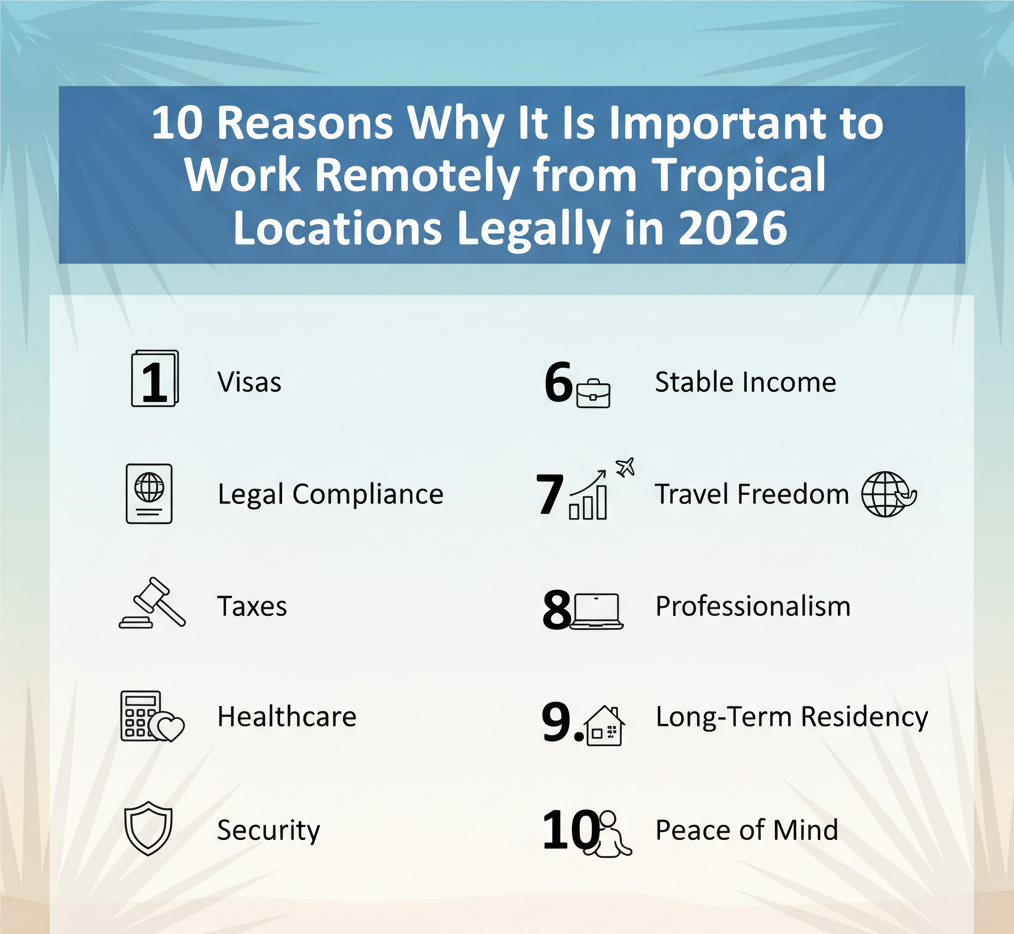
Legal compliance is not optional anymore. As remote work grows, governments are paying closer attention. Below are ten key reasons why working legally matters.
#1. Avoiding immigration penalties: Working without the correct visa can lead to fines, deportation, or entry bans. In 2026, immigration systems are more digitized, making overstays and unauthorized work easier to detect.
#2. Access to long-term stay options: Legal remote work visas allow you to stay for months or years instead of constantly doing visa runs. This stability improves productivity and peace of mind.
#3. Financial security and banking access: Legal status makes it easier to open bank accounts, access payment services, and move money internationally without sudden account freezes or compliance issues.
#4. Tax Clarity and Compliance: Working legally helps you understand where and how you should pay taxes. This prevents double taxation, penalties, or future legal disputes.
#5. Healthcare and insurance eligibility: Many digital nomad and remote work visas require health insurance, which ensures you can access quality care without financial shock.
#6. Professional credibility: Clients and employers increasingly ask about your legal work status. Being compliant builds trust and opens doors to better opportunities.
#7. Protection under local laws: Legal residents have clearer rights in case of disputes with landlords, service providers, or even clients operating locally.
#8. Smoother travel and re-entry: A clean immigration record makes international travel easier. You avoid stressful questioning or denied entry at borders.
#9. ability to integrate locally: Legal status allows you to rent long-term housing, join coworking communities, sign contracts, and truly integrate into the local environment.
#10. Future-Proofing Your Remote Career: As regulations tighten, those already compliant will adapt easily. Those working illegally may face sudden disruptions.
If you want to Work Remotely from Tropical Locations sustainably in 2026, legality is the foundation.
Step-by-Step Guide on How to Best Work Remotely from Tropical Locations Legally in 2026
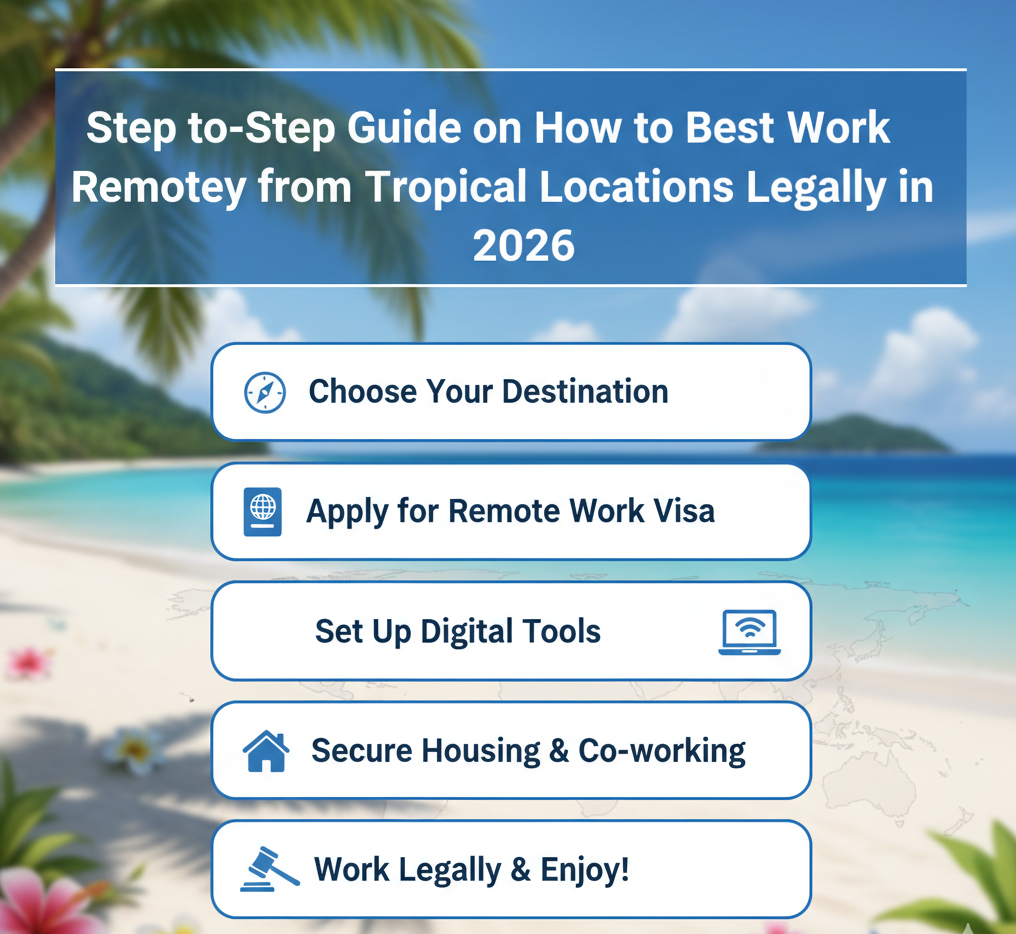
This step-by-step is designed such that a total beginner can also implement and achieve success. Each step builds on the previous one and can be followed in order.
Step one: Clarify your remote work model: Start by identifying how you earn income. Are you employed by a company, freelancing for multiple clients, running an online business, or consulting? This matters because different visas and tax rules apply to different income types. Write this down clearly before moving forward.
Step two: Confirm your income stability: Most legal remote work visas require proof of income. This may include payslips, contracts, bank statements, or client invoices. Ensure your income is consistent and meets minimum thresholds set by destination countries. If your income is irregular, stabilize it before relocating.
Step three: Research tropical countries with remote work visas. In 2026, many tropical countries offer digital nomad or remote work visas. Research official government sources, not blogs alone. Look for visa duration, renewal options, income requirements, allowed activities, and tax implications. Create a shortlist of two or three destinations.
Step four: Understand tax residency rules: Tax residency is often based on how many days you spend in a country. Some remote work visas offer tax exemptions on foreign income, while others do not. Consider consulting a tax professional to understand how to remain compliant both locally and in your home country.
Step five: Prepare required documentation: Common documents include passport copies, proof of income, employment contracts or business registration, police clearance, health insurance, and accommodation details. Start gathering these early, as some documents take time to obtain or authenticate.
Step six: Secure appropriate health insurance: Most countries require international health insurance covering your entire stay. Choose a policy that includes emergency care, hospitalization, and evacuation. This is both a legal requirement and a practical necessity.
Step seven: Apply for the correct visa: Submit your application through official channels, either online or via embassies. Avoid shortcuts or agents promising guaranteed approvals. Follow instructions carefully and keep copies of all submissions.
Step eight: Plan your accommodation legally: Book short-term housing initially, then transition to long-term rentals once you arrive. Ensure rental agreements are legitimate and compliant with local laws. Avoid informal arrangements that could complicate your residency status.
Step nine: Set up your remote work infrastructure: Reliable internet is non-negotiable. Research internet providers, Starlink is a good option as it laverages on on setlight coworking spaces, and backup connectivity options. Invest in power backups and secure communication tools to maintain professionalism.
Step ten: Register locally if required: Some countries require remote workers to register with immigration offices, local municipalities, or tax authorities after arrival. Complete these registrations promptly to remain compliant.
Step eleven: Maintain compliance throughout your stay: Track visa expiration dates, renewal requirements, and tax obligations. Keep records of income and travel days. Staying organized prevents last-minute stress and legal issues.
Step twelve: Build a sustainable routine: Legal compliance is not just paperwork. Establish work hours, respect local culture, and maintain work-life balance. This ensures you can continue to Work Remotely from Tropical Locations without burnout.
Conclusion: Work Remotely from Tropical Locations Legally
Working remotely from a tropical destination in 2026 is a legitimate, structured way of living and working that blends career growth with personal fulfillment. The key takeaway is that freedom works best when supported by legality, planning, and responsibility.
Here are some of our popular posts: Top 10 best website builders, Best super foods for a healthy lifestyle, the unlimited list of free productivity apps, Best freelance site to find remote jobs, top 10 productivity hacks for entrepreneurs , 10 best side hustles to make extra money online, best online courses for learning digital skills, top 10 best free coding website
To maximize everything discussed, start small. Choose one destination. Get compliant there. Learn the system. Then expand. Always prioritize legal visas, clear tax planning, reliable income, and professional conduct. Stay informed, as rules evolve.
When done correctly, choosing to Work Remotely from Tropical Locations can improve your productivity, health, and long-term career prospects. It allows you to design a life where work supports your lifestyle, not the other way around.
If you found this guide helpful, bookmark this page and come back for more practical, experience-based content on remote work, digital mobility, and building a sustainable online career in 2026 and beyond.
