



Fitness trackers are no longer new tech or something that only celebrities own. Over the last decade, fitness trackers have gone from gadgets for athletes to a general accessory worn by millions of people every day. Almost everyone now knows how many steps they take, how far they walk, and roughly how active they are.
Many early fitness trackers focused heavily on activity metrics without addressing what really matters, unlike the best fitness trackers that improve health. Health is not just about moving more; it is about recovering well, sleeping deeply, managing stress, understanding cardiovascular signals, and building habits that last over time. A device can show you numbers all day long, but if those numbers do not guide better decisions, they remain meaningless.
ALSO READ: The Best Habit Tracking Apps for Daily Focus and The Best Smart Glasses in 2026
So, despite this explosion in fitness tracking technology, many people are not actually healthier. This is the real problem most experts point out when evaluating wearables today. Counting steps alone does not change behavior, improve sleep, reduce stress, or protect long-term heart health.
This is why we and other professional reviewers and health-focused tech publications such as PCMag, TechAdvisor, and Wareable increasingly judge devices by different standards. Accuracy is now mandatory because inaccurate heart rate or sleep data leads to poor decisions. Actionable insights matter more than just raw statistics because people need guidance, not spreadsheets. Motivation and recovery features are now considered essential because long-term health depends on consistency, not intensity.
This guide is built around that philosophy. Instead of chasing hype, flashy screens, or endless features, this article focuses on the Best Fitness Trackers That Improve Health in real, measurable ways. These are devices that help users sleep better, train smarter, reduce burnout, and stay consistent over months and years, not just for a few weeks of excitement and hype.
Choosing the Best Fitness Trackers That Improve Health
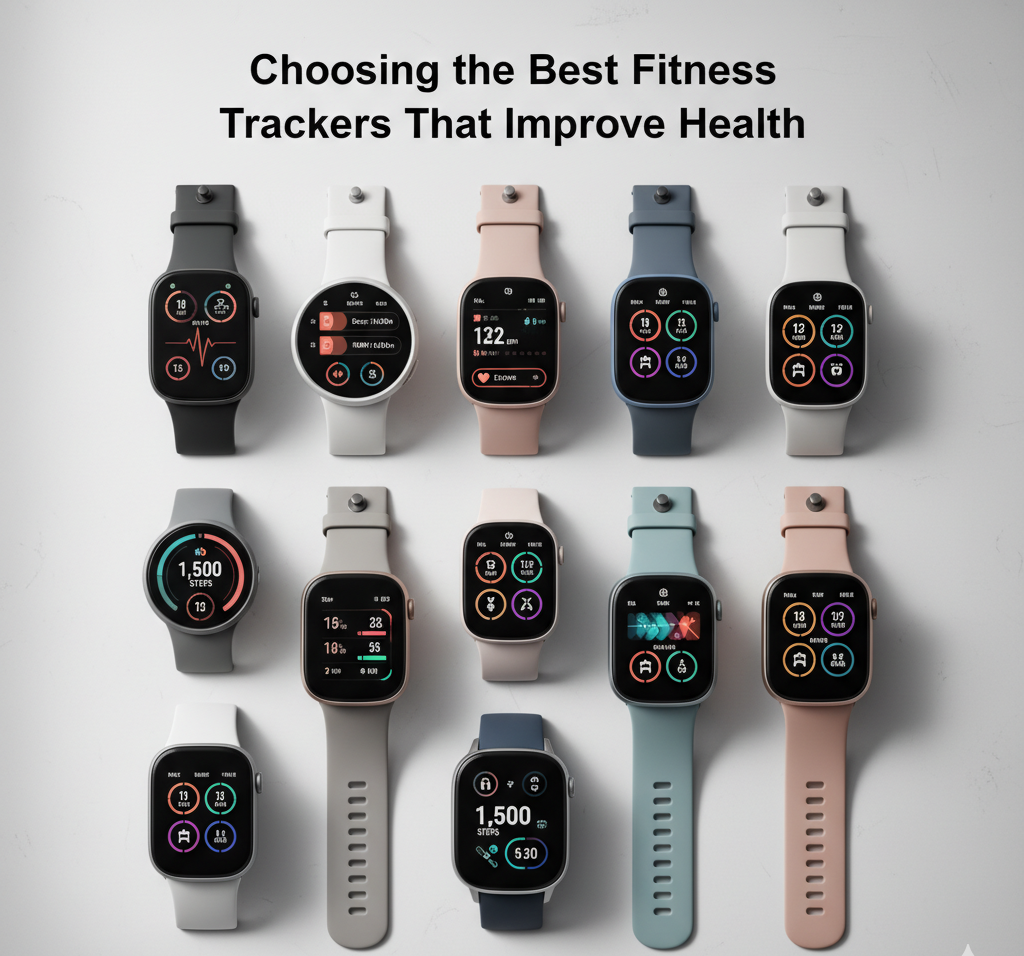
Choosing the right fitness tracker requires more than reading a spec sheet. To build a trustworthy list, we must follow the same evaluation logic used by professionals and expert opinions while keeping everyday users in mind. The devices in this guide were selected based on how well they support genuine health improvements rather than surface-level activity tracking.
Across expert reviews and long-term user feedback, certain criteria consistently stand out, which include. Accurate heart rate monitoring is foundational because it affects everything from calorie estimates to stress and recovery insights. Reliable sleep tracking is equally critical since sleep quality influences immune function, mental health, weight management, and cardiovascular health. Trackers that fail in these areas struggle to deliver real value.
Recovery, stress, and readiness insights were also central to this selection. Health improvement is not just about pushing harder; it is about knowing when to rest. Devices that help users recognize fatigue, manage stress, and avoid overtraining tend to create better long-term outcomes. Comfort and battery life also matter more than many people realize. A tracker that needs constant charging or feels uncomfortable during sleep is unlikely to be worn consistently, and consistency is where health benefits truly come from.
Another important factor is health coaching and habit-building features. Devices that gently guide users through reminders, trends, and context-based suggestions tend to outperform those that simply present data. Finally, value for money was considered carefully. Expensive devices are not automatically better for health, and budget trackers can be surprisingly effective when they focus on the right fundamentals.
Improving health means better sleep quality over time, improved cardiovascular awareness, smarter workouts with proper recovery, and sustained motivation rather than short-term bursts of activity. The Best Fitness Trackers That Improve Health are the ones that support these outcomes naturally as part of daily life.
Top 10 Best Fitness Trackers That Improve Health
#1. Fitbit Charge 6 (Best Overall for Health Improvement)
The Fitbit Charge 6 stands out as one of the most balanced and accessible devices for long-term health improvement. Fitbit has spent years refining how it translates raw data into understandable, motivating insights, and this experience shows clearly in the Charge 6. It goes far beyond basic step counting by offering detailed sleep stage analysis, continuous heart rate monitoring, stress tracking, ECG functionality, and heart rate zone feedback during exercise.
What truly makes this device effective for health improvement is how it connects daily behaviors to outcomes. The readiness-style insights help users understand when to push and when to rest, reducing burnout and injury risk. Sleep tracking is particularly strong, with clear breakdowns that encourage better bedtime routines rather than guilt or anxiety.
This tracker is especially well-suited for everyday users who are serious about improving their health but do not want to feel overwhelmed by technical metrics. It strikes a strong balance between simplicity and depth. While some advanced insights require a Fitbit Premium subscription, many users find that the guidance provided justifies the cost if long-term health is the goal.
#2. Xiaomi Smart Band 9 and 10 (Best Budget Health Tracker)
Xiaomi’s Smart Band series has quietly become one of the most effective budget-friendly options for health tracking. Despite the low price, these bands offer reliable heart rate monitoring, solid sleep tracking, and surprisingly long battery life. For many users, this combination is enough to build consistent habits, which is often more important than having the most advanced features.
The long battery life plays a crucial role in health improvement because it removes friction. When users do not have to worry about charging every few days, they are more likely to wear the device continuously, including during sleep. Over time, this consistency leads to better awareness of patterns in activity, rest, and recovery.
These trackers are ideal for beginners or budget-conscious users who want a simple, effective introduction to health tracking. While they may not offer advanced coaching or deep recovery analytics, they cover the fundamentals well, making them one of the Best Fitness Trackers That Improve Health for users who value simplicity and affordability.
#3. Garmin Forerunner 165 (Best for Fitness and Cardiovascular Health)
Garmin has long been known for its focus on performance and physiological accuracy, and the Forerunner 165 continues that tradition in a more accessible form. This tracker excels in cardiovascular health monitoring, offering metrics such as VO2 max estimates, stress tracking, and Garmin’s well-known Body Battery feature, which provides a clear snapshot of daily energy levels.
What sets Garmin apart is how it supports structured workouts and recovery. Instead of encouraging users to train harder every day, it provides insights into training load and recovery needs, helping to prevent overtraining. This approach is especially beneficial for heart health and long-term fitness progression.
The Forerunner 165 is best suited for runners, cyclists, and active users who want data-driven guidance without the complexity of higher-end Garmin models. For anyone serious about cardiovascular improvement, this device represents one of the Best Fitness Trackers That Improve Health through intelligent training support.
#4. Oura Ring 4 (Best for Sleep and Recovery Health)
The Oura Ring takes a very different approach to health tracking by focusing primarily on sleep, recovery, and readiness rather than visible activity metrics. Worn on the finger instead of the wrist, it provides exceptionally detailed sleep analysis that many experts consider industry-leading.
Oura’s readiness scores help users understand how well their body has recovered and whether it is a good day for intense activity or rest. This emphasis on recovery helps prevent chronic fatigue and supports better immune and mental health over time. Because the ring is lightweight and unobtrusive, it is especially comfortable for sleep tracking, which improves data quality and consistency.
This device is ideal for users who care deeply about sleep quality, stress management, and overall wellness rather than competitive fitness. While it requires a subscription for full insights, many users find that the clarity it brings to daily decisions makes it one of the most impactful health tools available.
#5. Whoop 5.0 (Best for Serious Health Optimization)
Whoop is designed for users who want to understand how lifestyle choices affect their body at a deep level. Instead of focusing on steps or calories, it emphasizes strain, recovery, and sleep. The device continuously monitors physiological signals and presents them in a way that encourages behavioral change.
The strength of Whoop lies in its ability to connect actions to outcomes. Late nights, alcohol consumption, intense workouts, and stress all show up clearly in recovery scores. Over time, users learn which habits support their health and which undermine it.
This tracker is best suited for athletes and biohacking enthusiasts who enjoy analyzing trends and making intentional lifestyle adjustments. While the subscription-only model may not appeal to everyone, Whoop remains one of the Best Fitness Trackers That Improve Health for users committed to optimization.
#6. Withings ScanWatch 2 (Best Hybrid Health Tracker)
The Withings ScanWatch 2 blends traditional watch aesthetics with advanced health monitoring, making it appealing to professionals who want discreet tracking. Its medical-grade heart monitoring features, including ECG and irregular heart rhythm detection, add a layer of health awareness that goes beyond fitness.
The long battery life, often lasting several weeks, significantly improves consistency. Users are more likely to wear the watch continuously, which leads to better long-term insights. Sleep tracking and activity monitoring are presented in a clean, understandable way that encourages steady improvements rather than extremes.
This tracker is ideal for users who value health monitoring but prefer a classic design over a sporty look. It proves that effective health tracking does not have to look like a fitness gadget.
#7. Samsung Galaxy Watch 7 (Best Smartwatch for Health Tracking)
For users who want health tracking alongside smart features, the Samsung Galaxy Watch 7 offers a compelling balance. It includes ECG, body composition analysis, stress tracking, and sleep insights, all integrated into a full smartwatch experience.
The strength of this device lies in its ecosystem integration. Health data is combined with reminders, apps, and daily tools that support habit formation. While battery life is shorter than that of dedicated fitness trackers, the convenience of having everything in one device can improve engagement and consistency.
This watch is best suited for Android users who want a multifunctional device without sacrificing health insights. When used intentionally, it can be one of the Best Fitness Trackers That Improve Health within the smartwatch category.
#8. Huawei Watch Fit 4 (Best for Outdoor and Activity Health)
The Huawei Watch Fit 4 focuses on encouraging an active lifestyle through accurate GPS tracking and a wide range of workout modes. Its strength lies in motivating users to move consistently while providing reliable heart rate and activity data.
For walkers, runners, and outdoor enthusiasts, accurate tracking builds confidence and supports gradual improvement. The device also offers sleep tracking and basic recovery insights, which help balance activity with rest.
This tracker is ideal for users who enjoy outdoor exercise and want a lightweight device that supports daily movement without unnecessary complexity.
#9. Fitbit Inspire 3 (Best Simple Health Tracker)
The Fitbit Inspire 3 is designed for users who want gentle guidance rather than intense analytics. It offers sleep tracking, stress monitoring, and basic activity insights in a small, comfortable form factor.
Its strength lies in habit formation. The reminders and trends help users build routines without feeling pressured. This makes it particularly effective for beginners, older users, or anyone returning to fitness after a long break.
By focusing on consistency and simplicity, the Inspire 3 earns its place among the Best Fitness Trackers That Improve Health for those who prefer an approachable experience.
#10. Amazfit Bip 6 (Best Screen and Battery for Health Motivation)
The Amazfit Bip 6 combines a large, bright display with impressive battery life, making health data easy to see and engage with. Visibility plays a surprisingly important role in motivation, as users are more likely to check and respond to insights when they are clear and accessible.
The long battery life reduces friction, encouraging continuous wear. Heart rate tracking, sleep analysis, and activity monitoring provide a solid foundation for health awareness.
This tracker is best for users who want ease of use, strong visibility, and minimal maintenance while still benefiting from essential health features.
Overview of the Top Fitness Trackers
Before we go into individual reviews and the top picks from our research, it is important to understand how these devices differ at a high level. Some trackers prioritize sleep and recovery, others focus on cardiovascular fitness and structured training, while a few aim to balance wellness insights with smart features. Battery life ranges from several days to several weeks, which has a significant impact on daily usability. Ideal users also vary widely, from beginners seeking gentle guidance to athletes optimizing performance. Keeping these differences in mind will help you identify which tracker aligns best with your health goals as you read through the list.
The best choice depends on your priorities. If sleep and recovery are your main focus, devices like Oura and Fitbit excel. For weight loss and habit building, Fitbit and Xiaomi provide approachable guidance. Athletes and performance-driven users benefit most from Garmin and Whoop. For style-conscious users, Withings and Samsung offer discreet, everyday wear.
Understanding your primary goal helps narrow down the Best Fitness Trackers That Improve Health for your situation.
Comparison Between Fitness Trackers vs Smartwatches
Because most smart watches tend to have some fitness tracking features, it’s easy to think they serve thesame way, but when choosing between a fitness tracker and a smartwatch, it is important to consider how each supports long-term health. Dedicated fitness trackers tend to focus on health metrics, recovery, and battery life, which supports consistency. Smartwatches offer versatility and convenience, but often require more frequent charging and can become distracting.
For many people, simplicity wins when it comes to health improvement. Devices that fade into the background while quietly collecting data often deliver better results than those demanding constant interaction.
Many users buy devices based on features they never use, leading to frustration. Others underestimate the importance of battery life, which affects consistency. Perhaps the most common mistake is chasing data instead of behavior change. Because numbers only matter when they tend to inform better choices.
Conclusion: The Best Fitness Trackers That Improve Health
Overall, the Fitbit Charge 6 stands out as the best all-around option for most users. Xiaomi offers the best budget choice, while Oura and Whoop lead in premium health optimization. Beginners will appreciate the simplicity of the Fitbit Inspire
ALSO READ: The Best Biohacking Tools to Optimize Your Body
Experts generally agree that fitness trackers can improve health, but only when used consistently and thoughtfully. Data alone is not enough. Devices that combine accurate tracking with coaching and context are far more effective than those that simply display numbers.
Fitness trackers can support heart health by increasing awareness of activity, recovery, and stress patterns. Affordable trackers can be accurate enough for general health improvement. GPS is helpful but not essential for health, and subscriptions are only worth it if the insights lead to meaningful behavior change.
Choosing the Best Fitness Trackers That Improve Health is ultimately about finding a device that fits naturally into your life and supports sustainable habits over time.
