



Your online portfolio is beyond a digital folder of past projects. It is not a static grid of images, a collection of logos, or a simple gallery page with a short bio underneath. If you want to build an online portfolio that gets clients in today’s competitive landscape, you must understand that clients are no longer impressed by visuals alone. They are evaluating how you think, how you solve problems, and whether you can create measurable impact.
The truth is simple but uncomfortable. The internet is saturated with beautiful portfolios. Templates are accessible. Artificial intelligence tools can generate layouts in minutes. Design polish is no longer rare. What is rare is clarity of thinking, strategic depth, and authentic proof of work. That is why learning how to best build an online portfolio that gets clients in 2026 requires a shift from showcasing outcomes to showcasing decisions.
We are living in an era where clients are cautious. They know AI can generate logos, landing pages, and copy instantly. They are not just looking for someone who can execute tasks. They are looking for a strategic partner. They want to understand your process. They want to see how you navigate constraints. They want evidence that you can handle complexity.
If you approach your portfolio as a marketing asset instead of a storage archive, everything changes. It becomes a conversion tool, a trust engine, and a positioning mechanism that moves you from vendor to consultant. That is the difference between getting inquiries and getting serious, high-paying clients.
The Death of the Static Portfolio
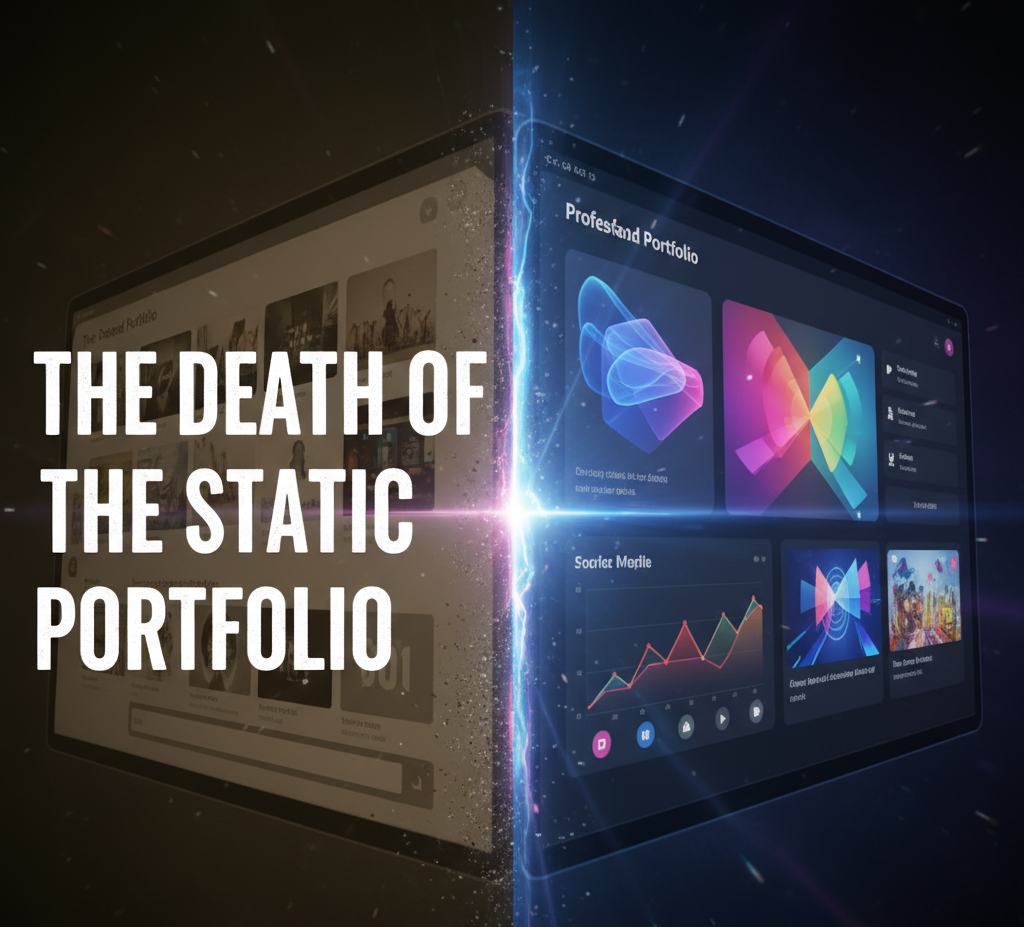
For years, freelancers and creatives were told to keep their portfolios simple. A homepage, a grid of projects, an about page, and a contact form. That structure worked when clients were primarily evaluating aesthetics. But the 2026 reality is different.
Clients now evaluate risk before hiring. They want reassurance. They want proof. A simple grid of images tells them what you produced. It does not tell them why you made certain decisions, what constraints you faced, or what measurable impact the work created. Without that context, your portfolio blends into thousands of similar-looking websites.
Imagine two designers applying for the same contract. The first shows ten beautiful landing pages with no explanation. The second presents three detailed case studies explaining the client’s problem, the limitations of the budget and timeline, the experiments that failed, and the outcome, including conversion improvements. The second designer appears strategic, thoughtful, and trustworthy. Even if the first designer’s visuals are slightly more polished, the second feels safer to hire.
When you build an online portfolio that gets clients, your goal is not to impress casually browsing peers. Your goal is to remove doubt from decision-makers.
The Three Pillars of a High-Conversion Portfolio
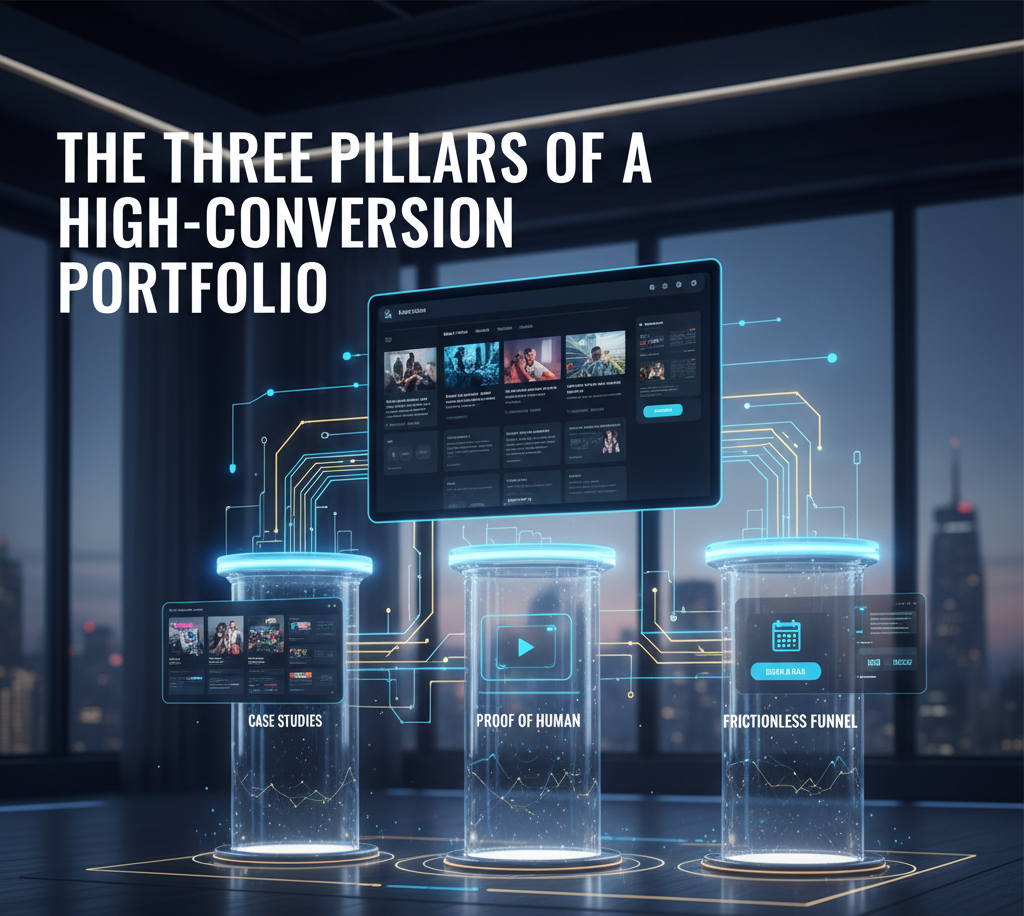
To best build an online portfolio that gets clients in 2026, you must structure it around three foundational pillars: narrative case studies, proof of human authenticity, and a frictionless conversion funnel.
#1. Narrative case studies. This represents the first pillar. Instead of simply stating the challenge and solution, you must walk readers through the decision and impact. Clients want to see your reasoning. They want to know why you chose one strategy over another. They want to understand how you handled constraints.
For example, if you redesigned an e-commerce website, do not just show before and after screenshots. Explain that the client had a limited budget, that their checkout abandonment rate was high, and that you analyzed user recordings before deciding to simplify the checkout process from five steps to three. Then show that conversion increased by 22 percent within two months. This narrative transforms your work from decoration to strategy.
#2. Proof of human authenticity. In an AI-driven world, clients question whether work is genuinely crafted or automatically generated. Including short video walkthroughs where you explain your process can dramatically increase trust. Behind-the-scenes screenshots of drafts, wireframes, and early brainstorming sessions reveal the messy middle that most portfolios hide. Ironically, showing imperfection builds credibility.
When you build an online portfolio that gets clients, transparency becomes a differentiator. It communicates effort, depth, and real involvement.
#3. frictionless conversion. Many freelancers lose opportunities not because their work is weak, but because their site creates unnecessary steps. If someone is impressed by your case study, they should be able to book a call immediately. Integrated scheduling systems and clear service pages reduce friction. In 2026, users expect seamless digital experiences. Your portfolio should feel like a premium application, not a static brochure.
Choosing the Right Portfolio Stack in 2026
Technology plays a supporting role when you build an online portfolio that gets clients, but choosing the right platform can either amplify your strengths or quietly sabotage your positioning. The key is alignment. Your portfolio tool should match your skill level, the type of clients you want to attract, and the experience you want visitors to have.
Below is an elaborated breakdown of the most relevant portfolio platforms in 2026, explained with practical, easy-to-understand examples so you can decide what fits your situation.
#1. Emergent for Full-Stack Professionals Who Think in Systems
If you are a developer, product designer, or technical strategist who enjoys building dynamic systems rather than static pages, Emergent is designed for you. It uses AI-powered prompt-based coding to generate complex website structures from detailed instructions. This allows you to move quickly from idea to execution while still retaining control over logic and customization.
Imagine you are a full-stack developer applying for SaaS contracts. Instead of building a traditional portfolio with screenshots of dashboards, you create a live interactive demo inside your portfolio. Visitors can click through a simulated product onboarding flow that you designed. You prompt the platform to generate backend-like behavior, responsive components, and micro-interactions without manually writing every line of code.
Now your portfolio does not feel like a gallery. It feels like a working product. That difference changes how clients perceive you. You are no longer just a coder. You appear as a systems thinker capable of building scalable digital experiences.
Emergent becomes particularly powerful if you want to demonstrate technical depth. For example, you could include a dynamic pricing calculator, a user authentication demo, or interactive dashboards that respond to user input. These features show clients what you can build in real-time, which is far more persuasive than static screenshots.
However, this platform is best suited for professionals comfortable shaping digital systems. If you are not confident with structured prompts and logical architecture, it may feel overwhelming.
#2. Framer for Designers Who Want Motion and Premium Aesthetics
If your strength lies in visual storytelling and high-end design, Framer offers a balance between creative control and no-code simplicity. It allows you to create smooth animations, transitions, and interactive elements that feel like a custom-built application.
Consider a brand designer showcasing identity projects. Instead of simply displaying a logo on a white background, you use subtle motion to reveal the brand story. As visitors scroll, typography animates into place. Color palettes transition smoothly. Case study sections expand elegantly when clicked.
This controlled motion guides attention. It highlights hierarchy. It creates a premium feel that aligns with high-value clients. In 2026, experience design is often more persuasive than static visuals.
For example, if you redesigned a fintech app, you could embed interactive prototypes directly into your portfolio. Clients can simulate tapping through app screens. They experience your thinking rather than just viewing it.
The key with Framer is restraint. Motion should enhance clarity, not distract. Overuse of animation can feel gimmicky. When used strategically, however, it elevates perception and reinforces your personal brand as modern and detail-oriented.
#3. Wix Studio for Freelance Agencies and Growing Teams
If you operate as an agency or plan to scale beyond solo freelancing, Wix Studio offers structured systems that go beyond simple page design. It combines responsive AI-generated layouts with advanced collaboration and client management features.
Imagine you run a small digital marketing agency. Your portfolio not only showcases projects. It includes a client onboarding section where new clients can log in, review project timelines, access shared documents, and communicate with your team.
Instead of sending multiple emails with attachments, your portfolio becomes a centralized hub. This creates operational efficiency and signals professionalism.
For example, a branding agency could showcase case studies publicly while providing private dashboards for active clients. These dashboards might display project milestones, feedback forms, and invoice tracking. Clients feel organized and supported.
Wix Studio becomes especially valuable when your portfolio doubles as infrastructure. If your goal is to position yourself as an agency rather than an individual freelancer, having these built-in systems reinforces that perception.
#4. Adobe Portfolio for Visual Artists Focused on Authenticity
Visual artists, photographers, and illustrators often prioritize clean presentation and authenticity. Adobe Portfolio integrates directly with Creative Cloud, allowing you to sync projects seamlessly from tools like Photoshop and Illustrator.
In 2026, content authentication has gained importance due to AI-generated imagery. Being able to validate originality strengthens credibility. When a photographer uploads a series of editorial shots, direct Creative Cloud integration ensures consistency and traceability.
Imagine a commercial photographer pitching to global brands. Their portfolio shows high-resolution galleries synchronized from Lightroom. Metadata and authenticity markers reinforce that the work is original. This subtle layer of trust can influence decision-making.
Adobe Portfolio is ideal if your work speaks primarily through visuals and you do not need heavy customization. It provides a streamlined way to present polished projects without spending excessive time on web development.
#5. Notion for Consultants and Minimalist Strategists
Notion may not look glamorous compared to high-motion design platforms, but for consultants, writers, and strategists, it can be surprisingly powerful. A well-structured Notion portfolio prioritizes clarity, logic, and writing depth.
Imagine you are a business consultant who helps startups refine growth strategies. Instead of animated visuals, your portfolio presents detailed breakdowns of client transformations. You include structured pages explaining your methodology, pricing tiers, and case studies supported by data.
Because Notion emphasizes clean organization, your thinking becomes the focal point. Visitors quickly understand your frameworks and approach.
For example, you might include a page titled Growth Audit Case Study, where you explain how you helped a startup increase retention by 18 percent through onboarding improvements. You outline the problem, your diagnosis process, the experiments conducted, and measurable outcomes.
If your strength lies in strategic reasoning rather than visual design, simplicity works in your favor. When you build an online portfolio that gets clients as a consultant, clarity often converts better than complex visuals.
Choosing a portfolio based on Positioning, Not Popularity

The most important insight is that the platform matters less than how you use it. A beautifully animated portfolio with shallow case studies will underperform compared to a simple, text-based portfolio that clearly demonstrates results.
If your goal is to attract product managers and startup founders, show them systems thinking and measurable impact. If you want luxury brand clients, create an immersive aesthetic experience. If you target corporate executives, emphasize clarity, proof, and ease of navigation.
Technology should amplify your positioning. It should not distract from it.
Before choosing a platform, ask yourself three practical questions. What type of clients do I want to attract? What skills do I want to highlight? What experience do I want visitors to feel when they explore my site?
When you answer these questions honestly, the right tool becomes obvious.
Ultimately, when you build an online portfolio that gets clients, structure and clarity outweigh flashy design. Your message, your process, and your results carry more weight than animation speed or template choice. The best portfolio platform is the one that helps you communicate your thinking clearly and convert attention into action.
The Client-Getter Portfolio Case Study Formula
If you truly want to build an online portfolio that gets clients, you must master the structure of persuasive case studies.
Begin with a strong hook. Open with a measurable result that immediately signals impact. Instead of saying “Brand redesign for X company,” say “How I increased X company’s website conversions by 22 percent in 60 days.” Numbers attract attention and imply accountability.
Then provide context. Who was the client? What industry were they in? What was at stake? High-stakes problems create narrative tension. Perhaps the business was losing customers due to an outdated design. Perhaps they were launching a new product in a crowded market.
Next, walk through your workflow. Show early sketches. Mention ideas that were rejected. Explain how feedback influenced direction. This transparency demonstrates maturity and collaboration skills.
Finally, present results clearly. Use data where possible. Include testimonials. Show live screenshots. If measurable results are unavailable, describe qualitative impact, such as improved brand clarity or stakeholder alignment.
When readers see both thought process and outcome, they perceive you as a strategist rather than a technician.
Optimizing a portfolio for Discovery in 2026
Building a great portfolio is not enough if no one sees it. To build an online portfolio that gets clients, you must optimize for discoverability.
Social SEO plays a central role. Your TikTok, LinkedIn, and Instagram content should drive traffic to your portfolio intentionally. Instead of generic links in bio, create specific landing pages aligned with each platform’s audience.
Generative Engine Optimization also matters. AI search engines increasingly recommend service providers based on structured content. Write your About page clearly. Describe who you help, what problems you solve, and what outcomes you deliver. Avoid vague statements like “I help brands grow.” Instead, say, “I help SaaS startups increase onboarding conversion through user-centered interface design.”
Mobile experience must be flawless. In 2026, many decision-makers browse portfolios on smartphones during brief windows between meetings. Your site should load quickly, scroll smoothly, and maintain design integrity on small screens. If it feels clunky, credibility drops instantly.
Portfolio Psychological Triggers That Close Deals

A strong portfolio does more than inform. It persuades. Consistency in visual identity creates a subconscious trust signal. When typography, spacing, and color feel cohesive, visitors perceive professionalism. This is often referred to as a vibe check. If the aesthetic feels disorganized, potential clients may assume your workflow is similar.
Micro-testimonials embedded within case studies are powerful. Instead of isolating testimonials on a separate page, place short client quotes within relevant project sections. When readers see praise aligned with specific achievements, credibility strengthens.
Calls to action must be intentional. Replace generic “Contact Me” buttons with outcome-oriented invitations such as “Book a Strategy Session” or “View Service Packages.” Specificity reduces hesitation. It tells visitors exactly what the next step involves.
Conclusion: How to Best Build an Online Portfolio That Gets Clients
Your portfolio functions as more than a showcase. It is your positioning engine. It signals how you think, how you communicate, and how you approach complexity. When done correctly, it pre-sells your expertise before a single conversation begins.
If you want to build an online portfolio that gets clients, audit your current site honestly. Does it reveal your thinking? Does it show results? Does it reduce friction? Does it feel intentional on mobile devices? If not, it is time to upgrade.
Artificial intelligence may generate layouts and content quickly, but your unique perspective cannot be replicated. The strongest portfolios reflect individuality, strategic depth, and empathy for client challenges.
As you refine your approach, remember that clarity converts. When visitors understand what you do, who you help, and why it works, they feel confident reaching out. That confidence is the foundation of consistent client acquisition.
If your goal is to stand out in a crowded digital landscape, commit to transforming your portfolio from a static gallery into a dynamic, strategic narrative. When you do, you will not just attract attention. You will attract the right clients, the kind who value expertise, respect process, and are willing to invest in meaningful collaboration.
