



We live and breathe digital marketing. From social media campaigns to search engine strategies, we’re constantly experimenting with new tools and technologies that help brands grow smarter. Over the years, we’ve tested almost every form of online advertising, and one area that continues to surprise us with its potential is programmatic advertising.
It’s one of the most advanced yet often overlooked methods in the digital marketing world. Many small business owners still see it as something reserved for big brands with huge budgets. But in reality, programmatic advertising for small businesses has become one of the most efficient, data-driven, and affordable ways to reach the right customers in 2025.
Because we believe in small beginnings and helping small and medium-sized businesses (SMBs) thrive, we want to break it down and show you how powerful it can be. In this post, we’ll explore The Best Programmatic Advertising for Small Businesses in 2025, what it is, why it matters, and how you can use it to compete with larger brands on a level playing field.
Here are some of our popular posts: Top 10 best website builders, Best super foods for a healthy lifestyle, the unlimited list of free productivity apps, Best freelance site to find remote jobs, top 10 productivity hacks for entrepreneurs , 10 best side hustles to make extra money online, best online courses for learning digital skills, top 10 best free coding website
From social media campaigns to AI-driven targeting, small businesses have endless ways to reach their audience. Yet, among all these options, one method continues to stand out: programmatic advertising for small businesses.
If you’ve ever wondered how large brands get their ads in front of the right people at the right time, the secret often lies in programmatic advertising. The good news is that small businesses can now access this same technology at affordable rates, thanks to automation, AI, and data-driven marketing platforms.
In this article, we’ll break down everything you need to know about programmatic advertising for small businesses. What programmatic advertising really is, why it’s powerful for small businesses, how to run a successful campaign, and the best platforms to use in 2025.
What Is Programmatic Advertising?
Programmatic advertising is an automated method of buying and selling digital ad space using artificial intelligence (AI) and real-time data. Instead of negotiating with publishers or manually choosing websites, the software automatically purchases ad space where your ideal audience is most likely to see it.
Imagine you run a small online store that sells handmade shoes. When someone nearby searches for “comfortable leather shoes,” the programmatic system can instantly display your ad on the websites, mobile apps, or even streaming platforms that person visits — without you lifting a finger.
At its core, programmatic advertising for small businesses works through a process called real-time bidding (RTB). Each time a web page loads, advertisers bid for the chance to show their ad to that specific visitor. The highest bidder wins, and their ad appears instantly.
This entire transaction happens in milliseconds, powered by algorithms that analyze data such as location, interests, behavior, and even time of day.
How Programmatic Advertising Differs from Traditional Advertising
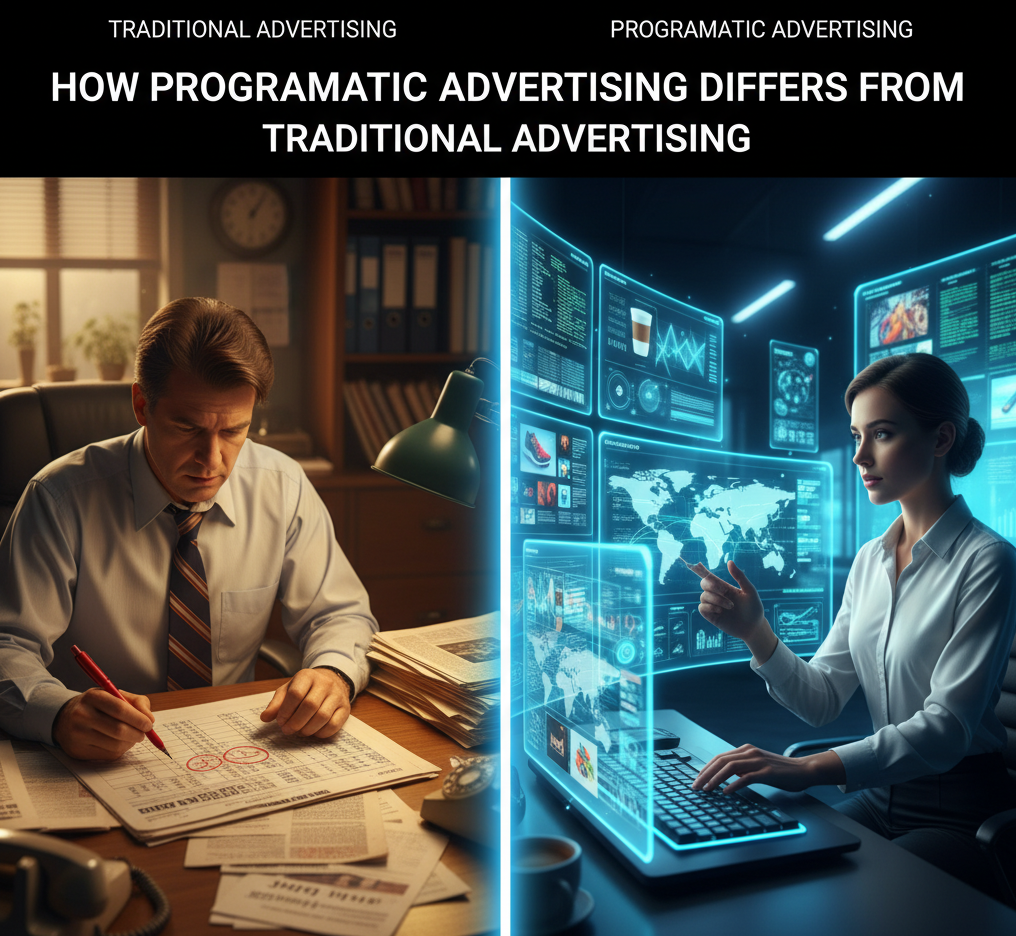
To understand the true power of programmatic advertising for small businesses, let’s compare it with traditional advertising methods:
#1. Automation vs. Manual Buying: Traditional advertising involves manually buying ad slots, negotiating rates, and relying on guesswork. Programmatic uses AI to automate everything, making the process faster and more accurate.
#2. Personalized Targeting vs. Generic Reach: Programmatic ads adapt to users’ interests, behaviors, and browsing history. Traditional ads often show the same message to everyone, wasting impressions on uninterested viewers.
#3. Real-Time Optimization: Unlike static campaigns, programmatic advertising lets you adjust your strategy in real time based on performance data.
#4. Cost Efficiency: Instead of paying fixed prices for broad exposure, you only pay for impressions that matter to people who are likely to engage with your business.
Programmatic advertising for small businesses replaces guesswork with precision and data, allowing you to make every ad dollar work harder.
Advantages of Programmatic Advertising for Small Businesses
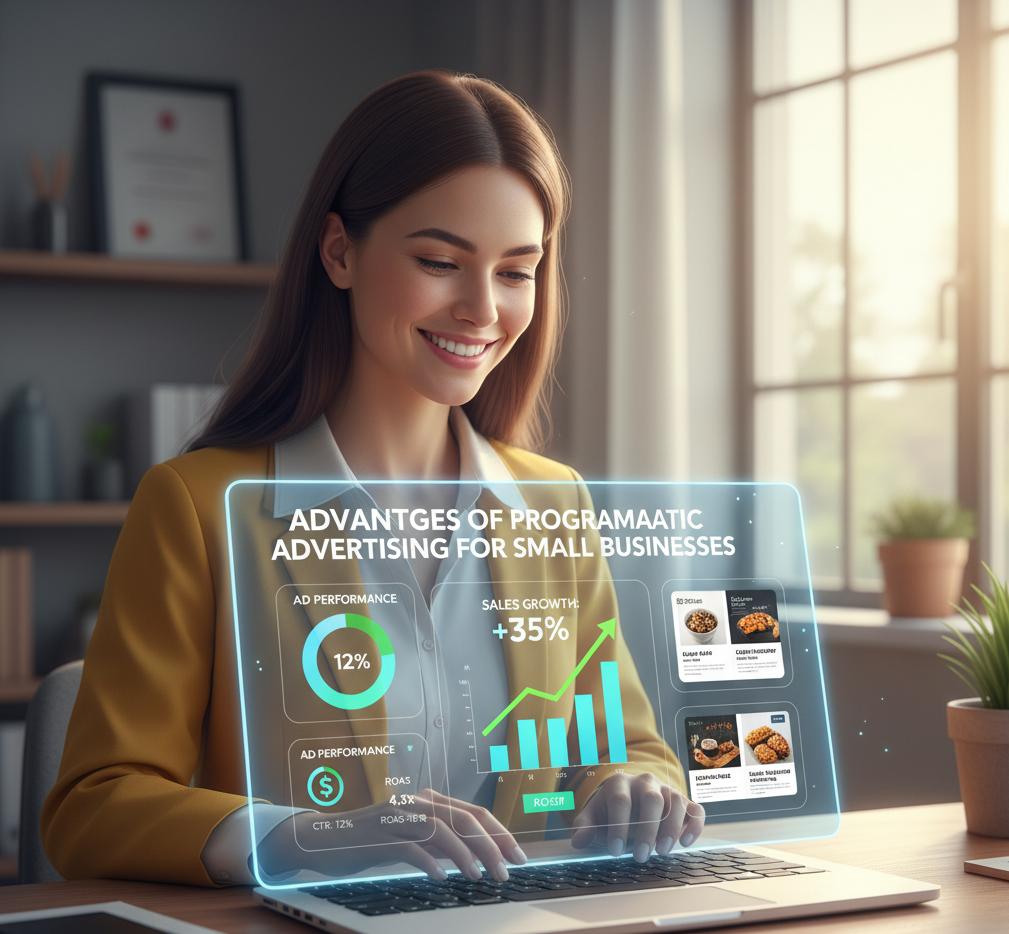
Small businesses often have limited budgets, so they need advertising that delivers measurable results. Here’s why programmatic advertising for small businesses is a game-changer:
#1. Data-Driven Targeting: Programmatic advertising uses data such as demographics, interests, and behaviors to identify your ideal customers, ensuring your ads reach people most likely to buy.
#2. Efficiency and Automation: You don’t have to manually manage placements or negotiate with publishers. The system automates ad buying, saving you time and effort.
#3. Real-Time Insights: See how your ads are performing instantly. You can monitor impressions, clicks, conversions, and make adjustments on the fly.
#4. Higher ROI: By focusing on relevant audiences, you get better conversion rates and more sales per dollar spent.
#5. Access to Multiple Channels: Programmatic ads can appear across websites, mobile apps, connected TVs (CTV), podcasts, and even digital billboards, all from one dashboard.
#6. Scalability: Whether you’re targeting a small town or the entire country, programmatic platforms scale effortlessly based on your goals.
#7. Personalized Ad Experiences: Programmatic tools allow for customized messages. For example, someone who visited your site yesterday can see a follow-up ad promoting a discount.
#8. Transparency and Control: You can see exactly where your money is going and which placements are delivering results.
#9. Better Brand Visibility: Your ads appear across premium websites and platforms, improving brand credibility and awareness.
#10. Affordable Entry: Many programmatic platforms now allow small budgets, making it accessible even to startups and local businesses.
10 Things Small Businesses Need to Know About Programmatic Advertising
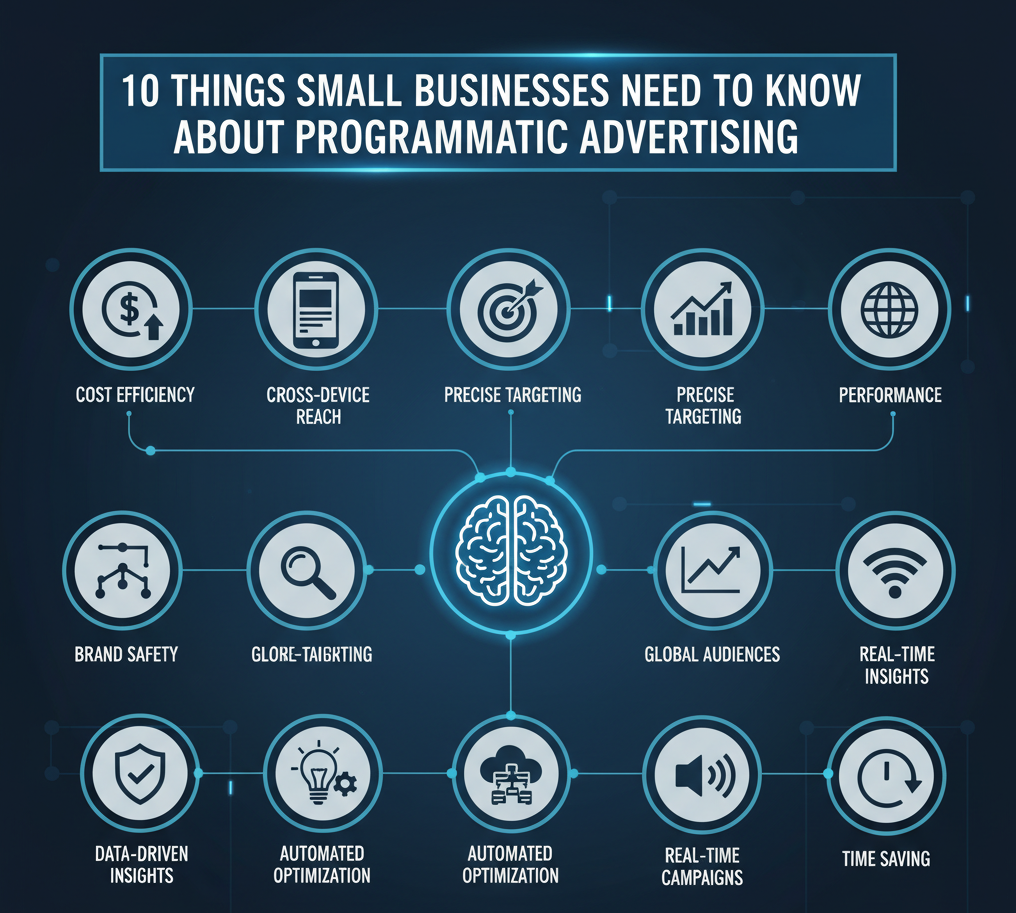
If you’re new to programmatic advertising for small businesses, here are ten things you should understand before getting started:
#1. Accessible to Everyone: Programmatic used to be limited to large corporations, but today, small businesses can run affordable, data-driven campaigns.
#2. AI Does the Heavy Lifting: Algorithms automatically decide where and when your ads appear for the best results.
#3. Budget Flexibility: You can set daily or monthly limits, ensuring you never overspend.
#4. Real-Time Bidding (RTB): Every ad impression is auctioned in real time, helping you pay only for relevant opportunities.
#5. Data is the Backbone: The more customer data you feed into your campaign, the better it performs. Integrate data from your website, CRM, or social media.
#6. Multi-Platform Reach: You can reach your audience across Google, YouTube, Spotify, Facebook, and even streaming TV apps.
#7. Retargeting Opportunities: Programmatic allows you to re-engage visitors who didn’t convert the first time, increasing your chances of a sale.
#8. Creative Still Matters: Automation won’t fix boring ads. Invest in strong visuals and persuasive copy that grabs attention.
#9. Track Everything: Every impression, click, and conversion can be tracked, which means no more guessing whether your ads worked.
#10. Compliance and Ethics Are Vital: Always respect user privacy and comply with laws like GDPR or Nigeria’s NDPR.
Steps to Successfully Run Programmatic Ads for a Small Business
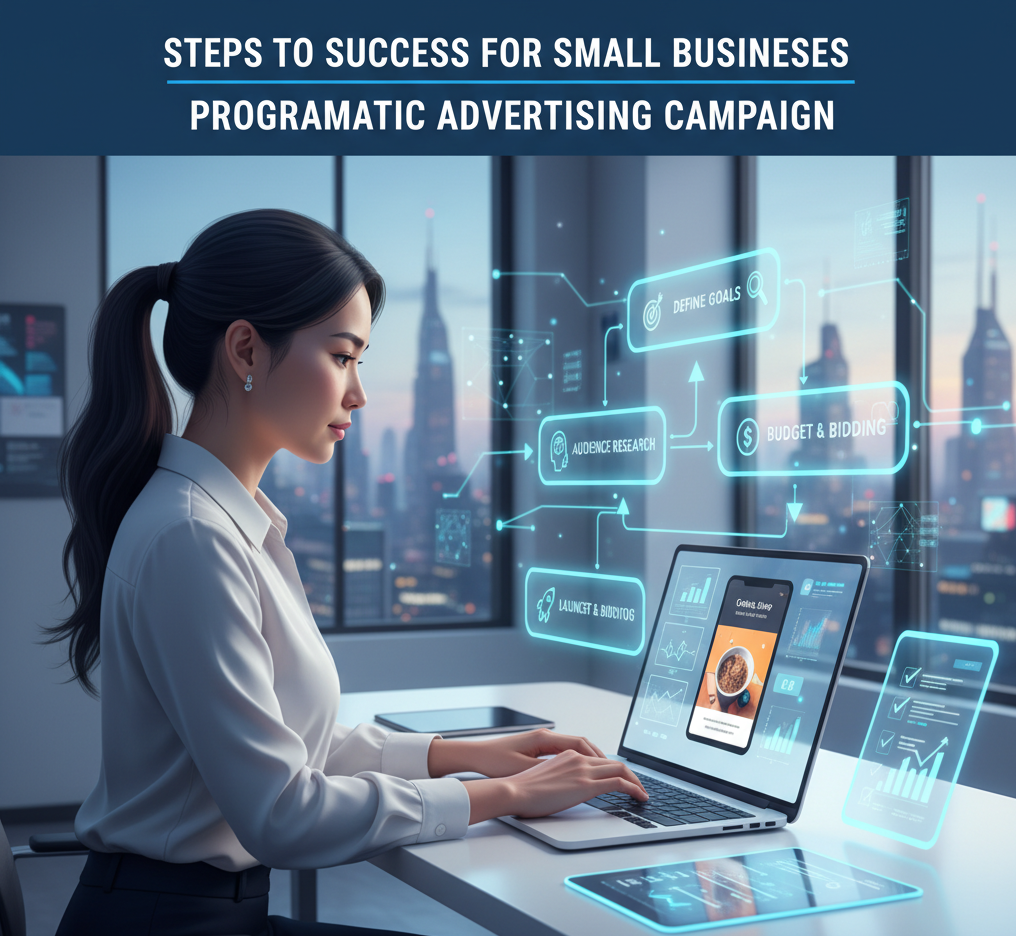
Now that you know how powerful this technology is, let’s look at the steps to run successful programmatic advertising for small business campaigns:
#1. Set Clear Goals: Identify what you want to achieve. whether it’s brand awareness, sales, lead generation, or website traffic.
#2. Understand Your Audience: Use analytics tools to learn who your customers are and what platforms they use most.
#3. Choose the Right Platform: Not all programmatic platforms are created equal. Select one that matches your business size, goals, and budget (we’ll discuss the best ones shortly).
#4. Create Engaging Ad Content: Use clear visuals, concise copy, and strong calls-to-action (CTAs). Keep your message simple and relevant.
#5. Set a Realistic Budget: Start small; even $200–$500 can be enough to test campaigns and collect performance data.
#6. Select Your Targeting Criteria: Choose targeting based on age, location, interests, devices, and browsing habits.
#7. Launch Your Campaign: Once your creatives and settings are ready, launch your campaign and let the AI optimize your results.
#8. Monitor Performance in Real Time: Watch your metrics daily or weekly. Check impressions, click-through rates, and conversions.
#9. Run A/B Tests: Test multiple versions of your ads to see which headlines, visuals, or CTAs perform best.
#10. Refine and Scale: Use your performance insights to improve future campaigns, increase your budget, and expand your reach.
The Best Programmatic Advertising Platforms for Small Businesses in 2025
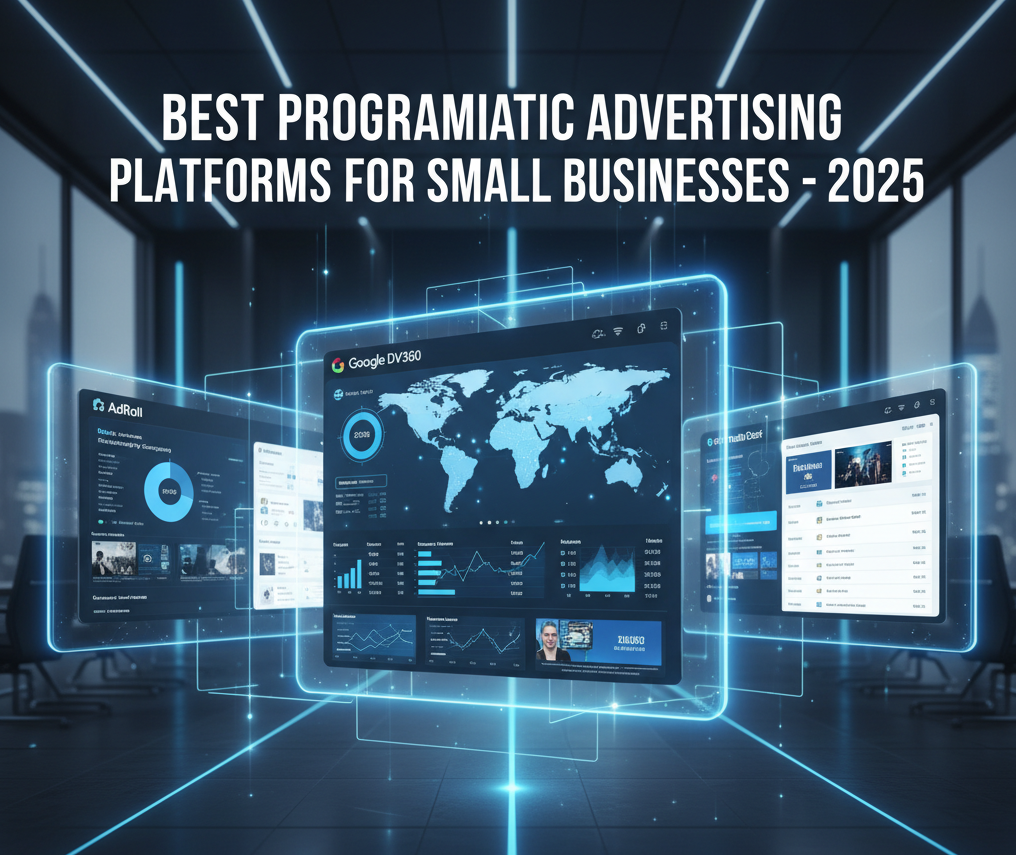
Choosing the right platform is essential for success. Below are some of the best programmatic advertising platforms for small businesses in 2025 that combine affordability, ease of use, and performance:
#1. Google Display & Video 360 (DV360): Google’s platform is perfect for businesses that want to manage display, video, and YouTube ads from one dashboard. It integrates with Google Ads and Analytics for seamless tracking.
#2. The Trade Desk: One of the most powerful DSPs (Demand-Side Platforms) globally, The Trade Desk offers extensive targeting options and access to premium inventory across multiple channels.
#3. AdRoll: Designed specifically for small and medium businesses, AdRoll offers retargeting, display, and social ads with an intuitive interface. It’s ideal for e-commerce brands.
#4. Choozle: Known for its simplicity and affordability, Choozle provides data-driven targeting and easy integration with major ad exchanges.
#5. MediaMath: MediaMath offers enterprise-grade technology but is also friendly for smaller advertisers. It provides deep analytics and automation capabilities.
#6. StackAdapt: Great for small businesses looking for multi-channel programmatic advertising — covering display, native, video, and connected TV.
#7. Smaato: Focused on mobile programmatic advertising, Smaato is ideal for businesses targeting smartphone users.
#8. AppNexus (now Xandr): Offers strong targeting and real-time reporting. Suitable for both agencies and small businesses ready to scale.
#9. Basis Technologies (formerly Centro): Provides full campaign management with easy reporting and budgeting features.
#10. Simplifi: Tailored for local advertising, Simplifi allows small businesses to reach specific geographic areas with precision targeting.
Each of these platforms offers unique strengths. If you’re just starting, AdRoll or Choozle are great entry points because they’re beginner-friendly and budget-conscious.
Things Small Businesses Should Look Out for When Running Programmatic Advertising

While programmatic advertising for small businesses is powerful, there are potential pitfalls to avoid:
#1. Ad Fraud: Be cautious of fake clicks and bot-generated traffic. Select platforms that have built-in fraud prevention systems.
#2. Overly Broad Targeting: Narrow your audience to avoid wasting budget on irrelevant impressions.
#3. Poor Ad Design: Even advanced technology can’t save a weak ad. Use clear visuals, compelling copy, and a strong call-to-action.
#4. Ignoring Mobile Users: Most internet traffic now comes from mobile. Make sure your ads and landing pages are optimized for smartphones.
#5. No Frequency Cap: Showing the same ad too many times can annoy users. Set limits to control repetition.
#6. Neglecting Data Privacy Rules: Always follow local and international privacy regulations to build trust with your audience.
#7. Failure to Track Conversions: Without tracking, you won’t know if your ads are truly working. Integrate conversion tracking tools like Google Tag Manager.
#8. Lack of Optimization: Don’t “set it and forget it.” Regularly review performance and tweak your targeting and creatives.
#9. Ignoring Ad Placement Quality: Cheap impressions may come from low-quality websites. Ensure your ads appear in brand-safe environments.
#10. No Long-Term Strategy: Programmatic advertising works best when treated as a continuous effort, not a one-time campaign.
Conclusion: programmatic advertising for small businesses
Programmatic advertising for small businesses has become one of the most effective, affordable, and data-driven ways to reach customers online. It offers automation, precision targeting, and real-time optimization that can turn even small ad budgets into measurable growth.
Here are some of our popular posts: Top 10 best website builders, Best super foods for a healthy lifestyle, the unlimited list of free productivity apps, Best freelance site to find remote jobs, top 10 productivity hacks for entrepreneurs , 10 best side hustles to make extra money online, best online courses for learning digital skills, top 10 best free coding website
By understanding how it works, choosing the right platform, and creating great ad content, small businesses can now compete with major brands on a global scale.
Whether you’re promoting a local service, e-commerce store, or digital product, programmatic advertising helps you reach the right people at the right time and with the right message.
The future of advertising is no longer manual. It’s automated, intelligent, and accessible. And for small businesses ready to grow, programmatic advertising is the key to staying ahead in 2025 and beyond. If you found this post valuable, check out our blog for similar content.
